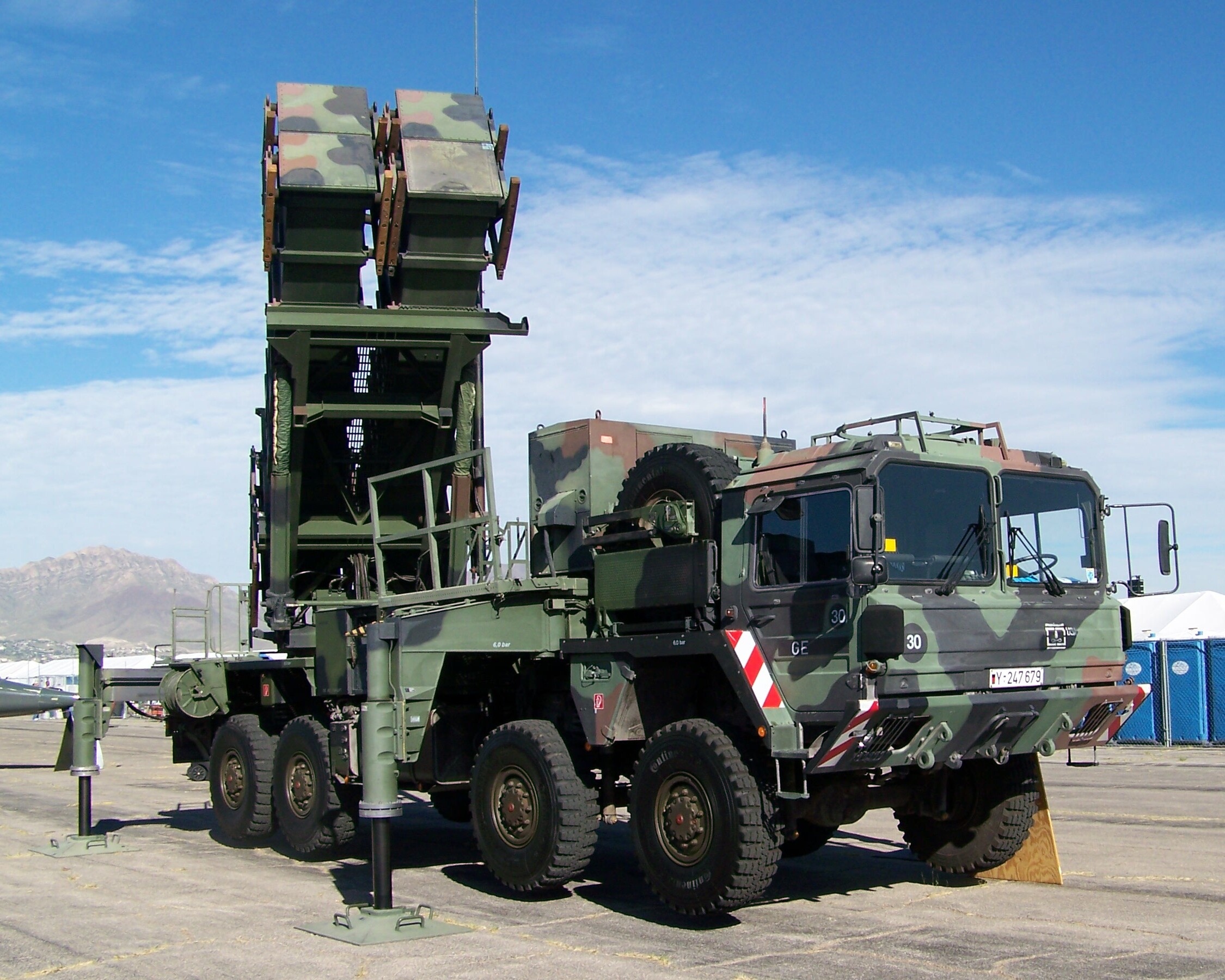
Ukraine is running short of interceptor missiles as Russian strikes continue, according to reporting on Friday. It is a supply problem rather than a battlefield one, and it determines what happens to cities more directly than almost anything occurring at the front.
Advertisement — ad space reserved
The arithmetic of interception
Air defence runs on an exchange that does not favour the defender.
An advanced interceptor is a precision guided missile costing, depending on type, somewhere between hundreds of thousands and several million dollars. Many of the things it shoots down cost far less — a long-range attack drone can be built for a small fraction of that. Defending against a cheap weapon with an expensive one is sustainable only while the expensive ones keep arriving.
Doctrine typically calls for firing more than one interceptor at a high-value incoming target, because a single shot is not certain. So a night of sustained attack can consume interceptors faster than a month of production replaces them. Advanced interceptors are manufactured in the low thousands per year globally, with lead times measured in years — the constraint is production lines, specialist components and skilled labour, none of which expand on demand.
Why the attacks are structured the way they are
This explains the pattern in recent strikes, including the hours-long attack on Kyiv this week that killed at least twelve people and damaged a children’s hospital, which we reported on Thursday.
Sending large numbers of cheap drones alongside a smaller number of ballistic missiles is not indiscriminate. The drones force defenders to expend interceptors, occupy crews and reveal where systems are positioned. The missiles then arrive against a defence that has been depleted and mapped. A long attack is a way of running down a finite stock.
Defenders respond by rationing — using guns and electronic warfare against drones where possible and reserving missiles for targets that require them. Rationing works until the volume rises.
Advertisement — ad space reserved
What a shortage looks like on the ground
A shortage does not announce itself. Coverage is not switched off; it is concentrated. Systems are moved to protect the capital, the power grid, and a small number of critical sites, and other cities receive less.
That is a decision made by defence planners with limited stock, and the consequence lands on civilians in places that were previously covered. It is also why casualty figures in a war like this can rise without any change at the front line, and without any change in how many missiles the attacker fires.
Why supply is political
The interceptors in question are made in a small number of countries, principally the United States and several European states, and every unit sent to Ukraine is one not held in the supplier’s own inventory or delivered to another customer.
That produces a genuine argument rather than a simple one. Supporters of continued transfers argue that air defence is unambiguously defensive, protects civilians, and is the least escalatory category of assistance available. Those urging caution point out that national stocks are finite, that other commitments exist, and that a country cannot give away a capability it may need without a plan to replace it. Both positions are held by serious people, and the binding constraint on either is the same: production capacity that takes years to expand.
The number to watch is not deliveries announced but factory output — and that number moves slowly regardless of what is decided in any capital.
Sources
Advertisement — ad space reserved
Leave a Reply