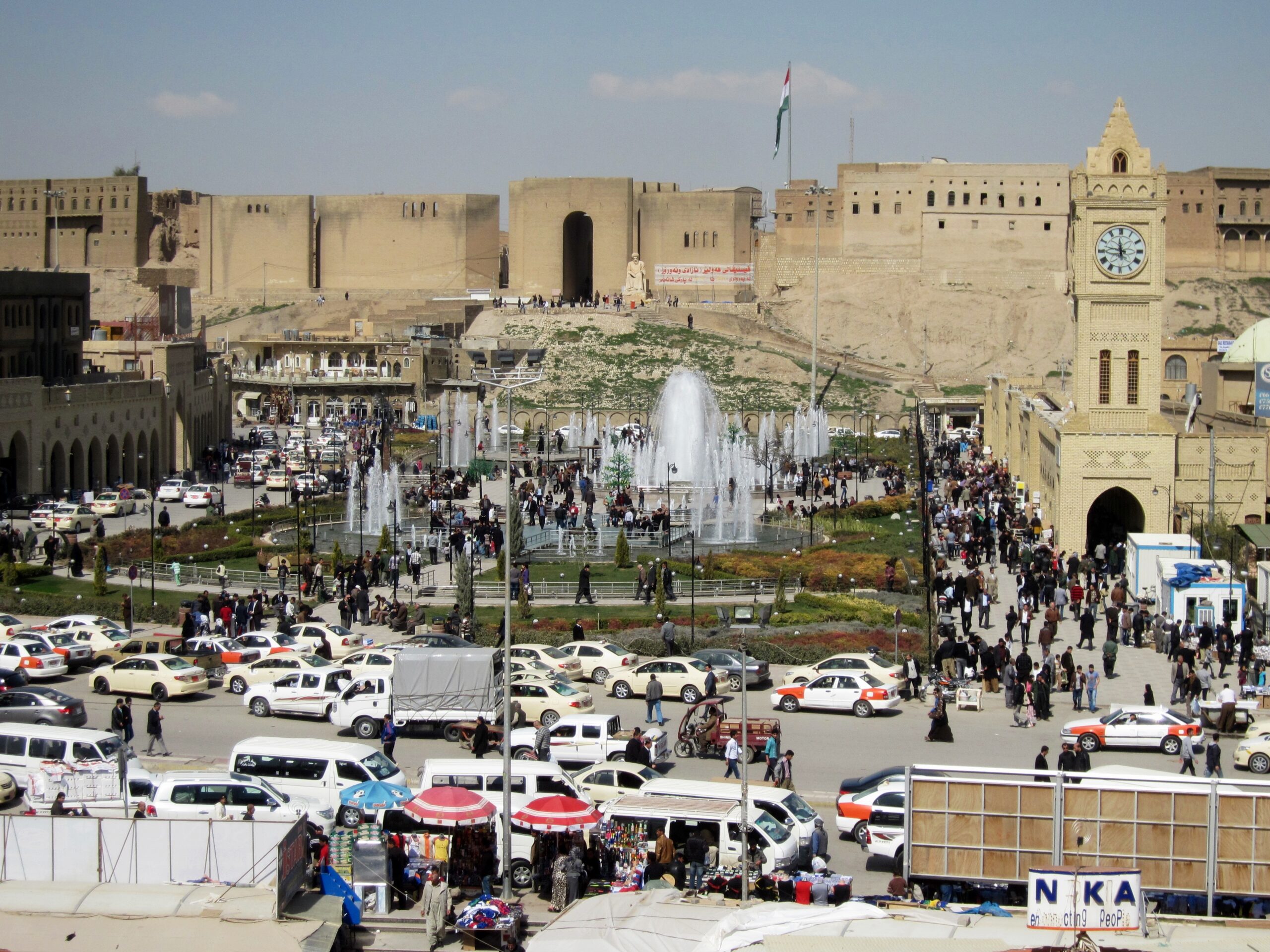
Two drones struck the office of the Kurdistan Regional Government’s prime minister and the home of the region’s intelligence chief in northern Iraq on Monday, according to the KRG’s own security agency. The agency said the attack was launched from Iranian territory, without clarifying whether the drones hit their targets.
Advertisement — ad space reserved
What each side says
The KRG security agency attributes the launch to Iranian territory. Iranian Foreign Minister Abbas Araghchi, in a phone call with his Iraqi counterpart reported by an Iranian news agency, said there was no information indicating the attack originated in Iran.
Those two statements are not quite opposites, and the gap between them is where most of the uncertainty sits. Saying a launch came from a country’s territory is not the same as saying that country’s armed forces conducted it. Iraq has hosted armed groups operating with varying degrees of independence from Tehran for two decades, and the border region is not tightly controlled by anyone.
We are reporting what each party has asserted. Nothing here has been independently verified, and at this stage it should not be presented as though it had been.
Why these targets
The Kurdistan Region is an autonomous part of Iraq with its own government, security services and relationships with outside powers — including, historically, working ties with the United States. Its energy infrastructure and its leadership have been struck before during periods of escalation, and the pattern usually indicates a message rather than an attempt at territorial change.
Hitting a prime minister’s office and an intelligence chief’s home, rather than a military installation, is a specific kind of signal: it says the sender knows where the leadership is and can reach it. Whether the intent is deterrence, retaliation for something not publicly known, or an attempt to pull Iraq further into the war is not something the strike itself reveals.
Advertisement — ad space reserved
Baghdad’s position
Iraq’s federal government has spent the war trying to stay out of it while sitting geographically and politically in the middle of it. An attack on the leadership of a region within its borders, attributed by that region to a neighbouring state, puts Baghdad in a position where any response — protest, silence, or investigation — is read as a choice of side.
The phone call between the two foreign ministers is itself the significant detail. Contact happening at that level, quickly, suggests both governments would prefer to contain this rather than escalate it.
Where it fits
This lands on the same day the US–Iran ceasefire expired without extension and Tehran signalled a shift in military posture, as we set out in our report on the ceasefire’s expiry. Houthi forces also claimed an attack on a Saudi military vessel in the Red Sea.
The common feature of these events is that they involve different actors in different countries, not one command issuing orders. That is what makes this phase difficult to read and difficult to stop: a ceasefire between two governments does not bind everyone with the means to fire.
Sources
Advertisement — ad space reserved
Leave a Reply