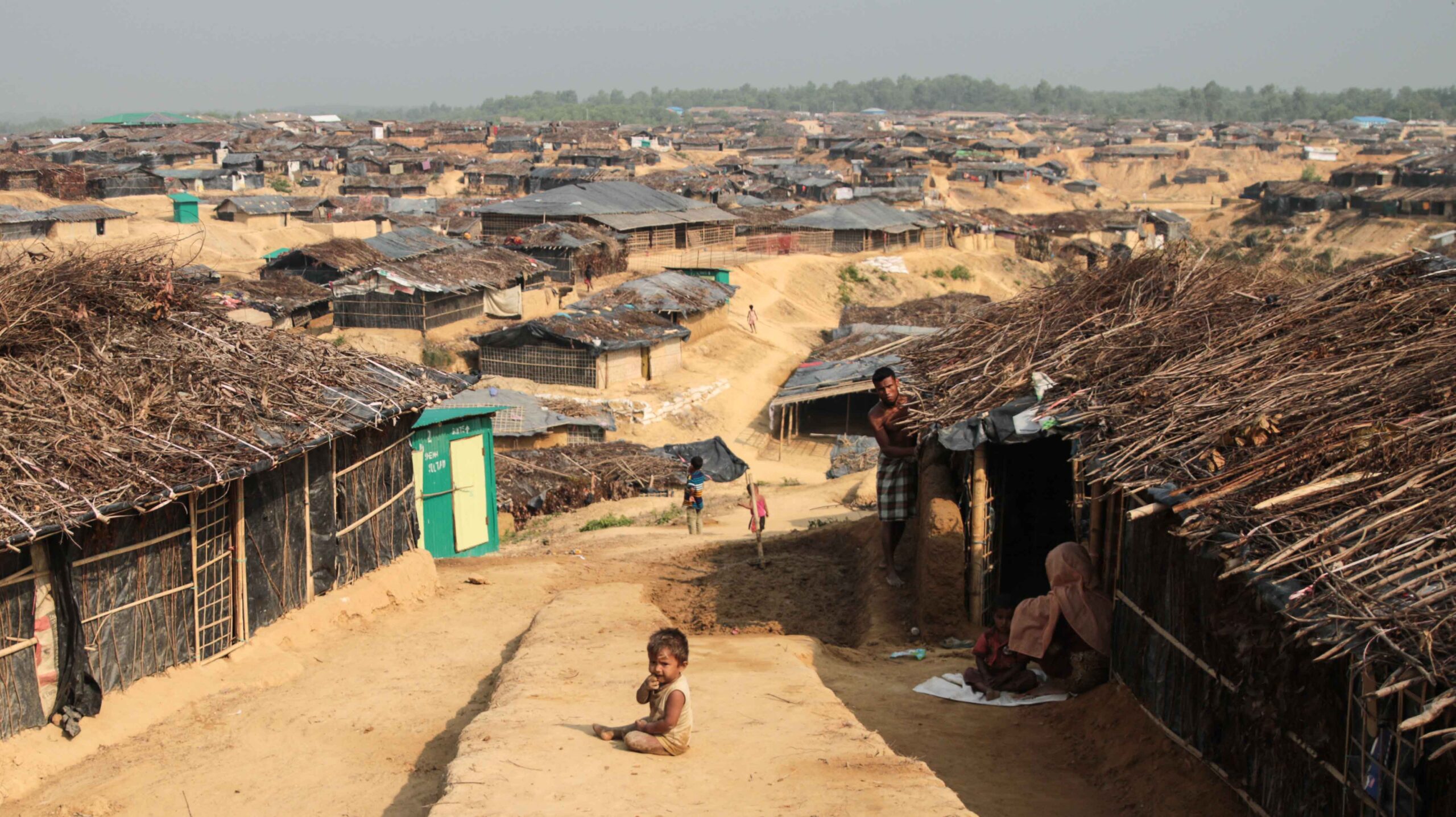
On 25 August it will be eight years since the Myanmar military drove the Rohingya out of northern Rakhine State. Roughly three-quarters of a million people crossed into Bangladesh in a matter of weeks, joining several hundred thousand who had fled earlier waves. Almost all of them are still there.
The camps around Cox’s Bazar have become the largest concentration of refugees on the planet. Eight years is long enough for a generation of children to have grown up inside them without ever having seen the country they are from.
Advertisement — ad space reserved
The current position
Roughly a million Rohingya live in the Cox’s Bazar camps and on the island of Bhasan Char, to which around 30,000 have been relocated. The Bangladeshi government considers them temporary and has resisted anything that would suggest permanent settlement, including formal work rights and full access to education.
Fresh arrivals continue. In 2024 and 2025, fighting between Myanmar’s military junta and the Arakan Army — an ethnic Rakhine armed group that has taken control of much of northern Rakhine State — pushed more Rohingya across the border. The UN High Commissioner for Refugees recorded tens of thousands of new arrivals in 2024 alone.
Funding for the response has collapsed. Cuts to development budgets in several donor countries this year have hit humanitarian appeals for protracted crises hardest. In-camp rations have been reduced. Medical services have been scaled back. The World Food Programme has repeatedly warned it is running out of money.
Why they cannot go home
Myanmar has never revoked the 1982 citizenship law that made the Rohingya effectively stateless — the underlying legal position that allowed the 2017 expulsion to be framed as a security operation rather than persecution. The military junta that seized power in 2021 has no interest in reversing that position. The Arakan Army, which now holds the territory the Rohingya are from, has been accused of serious violence against Rohingya civilians itself, and its position on their return is unclear.
A voluntary return would require somewhere safe to return to, someone in authority prepared to guarantee their safety, and a legal framework that recognises them as belonging. Currently none of those three exists.
Advertisement — ad space reserved
The legal case
The Gambia brought a case against Myanmar at the International Court of Justice in 2019 alleging genocide against the Rohingya. The court has jurisdiction under the Genocide Convention, and its provisional measures ordered Myanmar to prevent further genocidal acts and preserve evidence. The main case remains pending.
Separately, the International Criminal Court has an active investigation into crimes against humanity, using an unusual jurisdictional theory: because the deportation occurred into Bangladesh, which is a party to the Rome Statute, some of the criminal acts can be said to have occurred in ICC territory even though Myanmar is not a party.
Neither process has produced enforcement. Both keep the record on file.
What “protracted” means in practice
The word humanitarian agencies use for crises that outlast their initial acute phase is “protracted.” What it means on the ground is generations. A child born in Cox’s Bazar in 2017 is now finishing primary school in a camp that was originally intended to last months. Marriages, funerals, births, businesses — the ordinary shape of a life is now happening in a place that officially does not intend to be a place.
The pressure that produces is real. It shows up in mental health data, in trafficking rates, and in the increasing willingness of young Rohingya to attempt dangerous sea crossings toward Malaysia or Indonesia — journeys that have killed hundreds in recent years and which the countries at the receiving end have generally responded to by pushing boats back to sea.
Eight years in, this is what forgetting a crisis looks like: fewer stories, less money, more people, and no obvious end.
Sources
UN High Commissioner for Refugees Cox’s Bazar operational updates; International Organization for Migration reporting; International Court of Justice case The Gambia v Myanmar; ICC Office of the Prosecutor statements on the Bangladesh/Myanmar situation.
Advertisement — ad space reserved
Leave a Reply