Two announcements on 13 August, from the two largest American AI developers, point in the same direction: the competition has moved from who has the smartest model to who can run one cheaply and quickly enough to be worth deploying at scale.
Google launched Gemini 3.7 Flash, a lower-cost model aimed at software coding and autonomous business workflows, priced at an introductory $0.75 per million input tokens and $3.75 per million output tokens through the end of 2026 — half the original price of its predecessor. Google says it improves debugging and code generation, and gives software agents a stronger ability to plan tasks and complete multi-step work with less human intervention.
The same day, OpenAI previewed Ultrafast, an API tier that runs its flagship model up to fourteen times faster than standard processing. Powered by hardware from Cerebras, the company says it can generate up to 750 output tokens per second while retaining the flagship’s capability, aimed at time-sensitive uses such as incident response, live financial research, customer support and voice systems.
Advertisement — ad space reserved
What a token is, and why price per token matters
A token is roughly three-quarters of a word. Models are billed by how much text goes in and how much comes out, which is why the two prices differ — generating is more expensive than reading.
Those fractions of a cent decide what gets built. A company processing a few thousand documents barely notices the difference. A company running an automated system that reads every support ticket, drafts a reply and checks it against records is making millions of calls, and a halving of price is the difference between a viable product and an expensive experiment.
Speed works the same way. A system that takes thirty seconds to respond cannot sit inside a phone call. One that responds in two seconds can. Faster inference does not make a model cleverer; it makes a set of applications possible that were not before.
Prices moving in opposite directions
The notable wrinkle is that not everyone is cutting. While OpenAI and Anthropic have been reducing prices, the Chinese developer DeepSeek has been raising them.
That divergence is informative. Price cuts in this market are rarely a pure reflection of falling costs; they are a bid for the position of default infrastructure, funded by investors willing to accept losses for market share. Raising prices suggests either genuine cost pressure or a decision that customers are locked in enough to absorb it.
Advertisement — ad space reserved
The bill underneath
Cheaper access to customers does not mean the underlying activity is cheap. Reported figures put large technology companies’ AI purchase commitments approaching $1.5 trillion, and the Chinese chipmaker SMIC has been raising prices as its factories run near capacity.
Both facts sit awkwardly beside falling consumer prices. Somebody is absorbing the difference, and at present it is investors rather than users. Whether that holds is the question hanging over the sector, and it is not one that a pricing announcement answers.
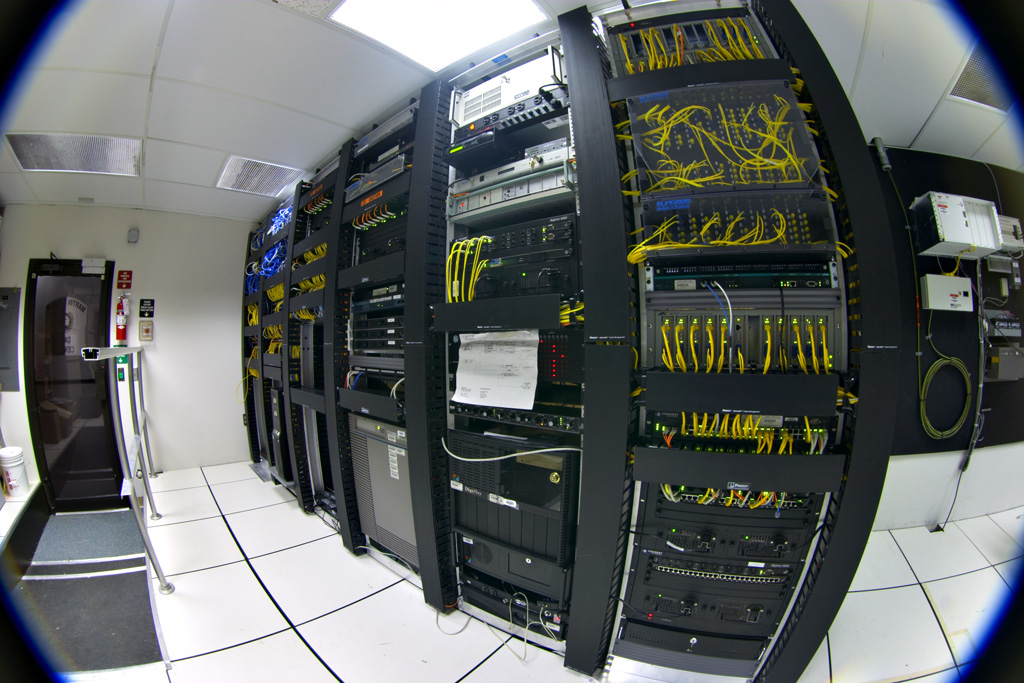
The other cost is physical. Inference at this volume runs on data centres that consume electricity and water, sited in real places with real grids — which is why AI infrastructure is now appearing in local planning disputes rather than only in technology coverage.
What to watch
Introductory pricing is introductory. Google’s rate is stated as running through the end of 2026, and what follows will say more about the real economics than the launch does. The pattern to watch is whether prices settle at a sustainable level once market share is established, or whether the current numbers depend on continued willingness to fund losses.
For everyone outside the industry, the practical consequence is that automated systems will keep appearing in places where they were previously too slow or too expensive — customer service, coding, document handling — for reasons that have nothing to do with any breakthrough in capability.
Sources
Company announcements of 13 August 2026 as reported by Manaknight Digital’s weekly AI roundup and Tech Startups; industry reporting on AI purchase commitments and SMIC pricing.
Advertisement — ad space reserved
Leave a Reply