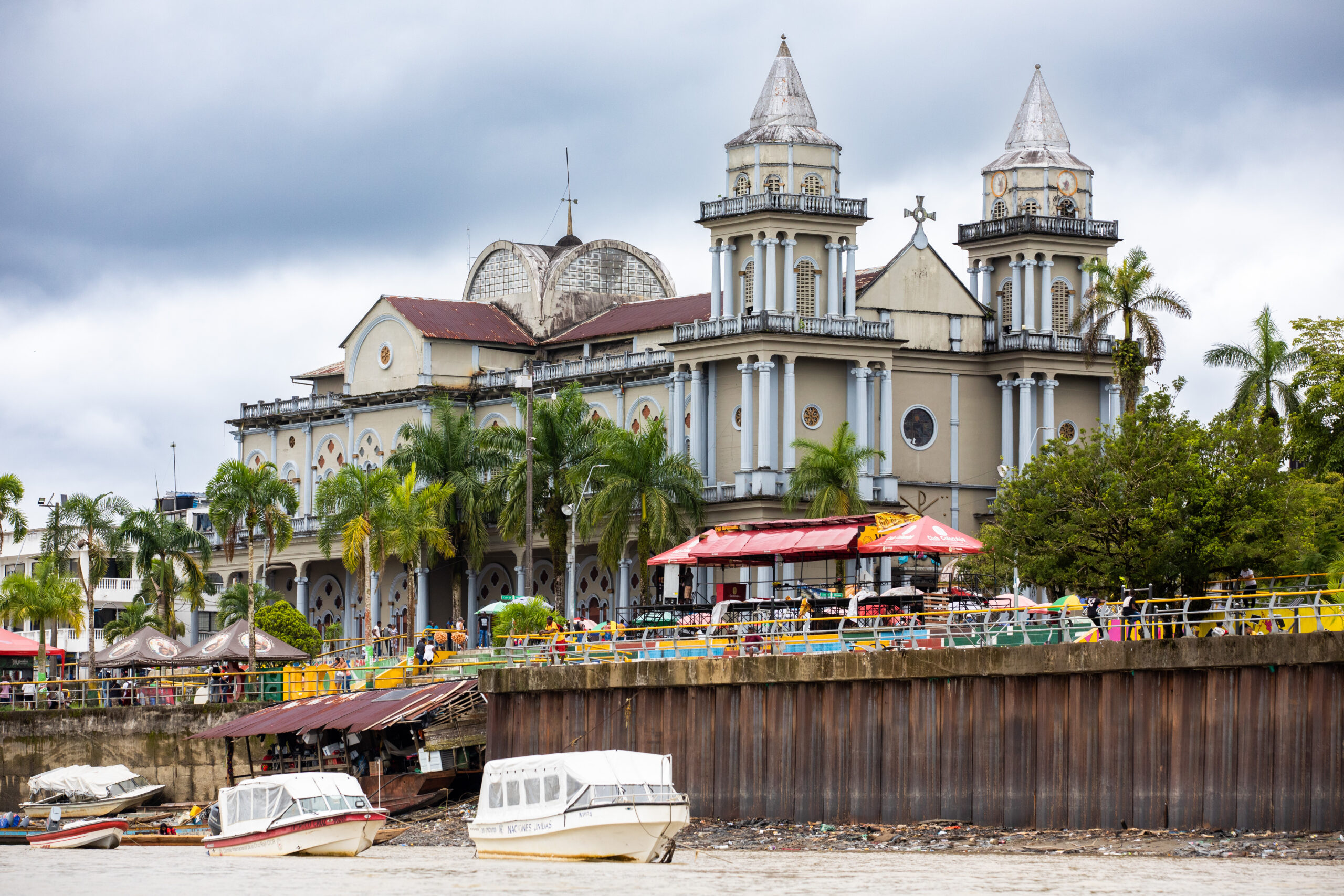
The epicentre of Colombia’s earthquake was in Chocó, near San José del Palmar. Most of the reported deaths so far are from Pereira, Cali and Manizales — cities well to the east.
That gap does not mean Chocó escaped. It means we do not yet know what happened there.
Advertisement — ad space reserved
Where Chocó is
Chocó occupies Colombia’s Pacific coast: dense rainforest, extremely high rainfall, and rivers that serve as the main roads. Its capital, Quibdó, sits on the Atrato River.
Much of the department is reachable only by boat or small aircraft. It is also among Colombia’s poorest regions, with a population that is predominantly Afro-Colombian, and it has historically received less state investment than the Andean interior.
Why the toll from remote areas arrives last
Casualty figures are built from reports, and reports require someone to make them and a means of transmitting them.
A city has hospitals that count admissions, a municipal government that compiles numbers, and journalists on the ground. A river community of a few hundred people has none of that. If mobile coverage fails — and it commonly does after an earthquake, when power is lost and masts are damaged — that community is simply silent.
Silence gets read as absence of damage. It is usually the opposite: the places hardest to hear from are the places hardest to reach, which are the places least likely to have had help.
What reaching them requires
Seven airports suspended operations after the quake, and in a region where flying is the alternative to a multi-day river journey, that matters more than it would elsewhere.
Assessment teams generally have to travel by helicopter or boat, carrying their own supplies, to places where a damaged clinic may have been the only medical facility for a wide area. Each village has to be visited individually. There is no equivalent of driving down a road counting collapsed buildings.
The practical consequence is a lag of days between an event and any reliable picture — by which time international attention has usually moved on.
Why this pattern repeats
It is worth naming because it is not specific to Colombia. After almost every major disaster, the initial figures come from cities and are later revised upward as rural and remote areas are reached.
Aid allocation follows reported need, and reported need follows access. Communities that are hard to reach are therefore doubly disadvantaged: they are harder to help, and their need is documented late enough that the money and attention have often already been committed elsewhere.
We will report what emerges from Chocó when it emerges. The absence of news from the epicentre is currently the most significant unknown in this story.
Sources: NPR; Al Jazeera; Colombian Association of Capital Cities, 10–11 August 2026.
Advertisement — ad space reserved
Leave a Reply