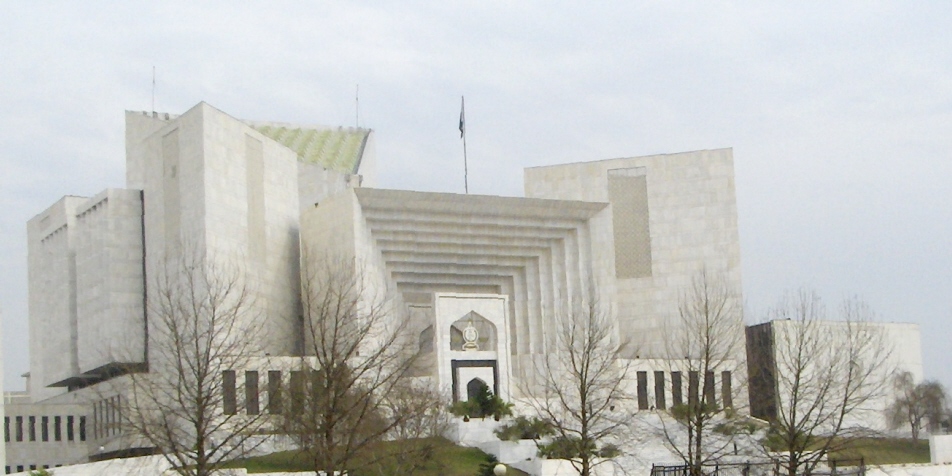
The government of Sindh, Pakistan, has announced that a judicial commission headed by a judge of the Sindh High Court will investigate the death of Mir Raza Ali. The decision followed a recommendation from the Sindh Assembly.
A legislature asking for an inquiry, and a government granting one, is a small procedural event that tells you a good deal about how accountability works — and where it stalls.
Advertisement — ad space reserved
The structure behind the announcement
Pakistan is a federation. Sindh is one of its provinces, with its own elected assembly and its own government, and its own High Court sitting above the provincial judiciary.
Three institutions appear in this story and each plays a distinct part. The Assembly — elected representatives — recommended an inquiry. The provincial government decided to establish one. And the High Court supplies the judge who will lead it.
That sequence matters. An assembly can generally recommend but not compel; a government can act or decline; a judge brings independence the other two lack.
Why a judge rather than the police
Police investigate deaths as a matter of routine. A judicial commission is established when that ordinary process is not trusted to produce an answer — most often where state officials, or the police themselves, may be implicated, or where a case has become politically charged.
A judge is chosen because judicial independence is the point. A serving judge is not employed by the government being examined and cannot readily be dismissed by it.
Commissions of this kind typically have powers a journalist or campaigner does not: to summon witnesses, compel the production of documents, and take evidence under oath.
Advertisement — ad space reserved
What a commission cannot do
This is where expectations and reality tend to part company, and it is worth being clear about it in advance.
A commission of inquiry generally establishes facts and makes findings. It does not usually convict anyone. Where it identifies wrongdoing, prosecution remains a separate decision taken by prosecuting authorities, who may decline.
Its terms of reference — the questions it is permitted to examine — are set by the body that creates it. Narrow terms can produce a report that answers a small question accurately while leaving the larger one untouched.
Publication is not guaranteed either. Reports have been delayed, released in part, or withheld in many countries and many cases.
None of this is specific to Pakistan. It is a general feature of the instrument, and it is why the announcement of an inquiry is the beginning of a process rather than its conclusion.
Why they get announced anyway
Two readings are available, and both are usually partly true.
The generous one: a government facing public anger about a death recognises that an independent examination is the only thing that will settle the question, and provides one.
The sceptical one: announcing an inquiry transfers a difficult subject from the political arena to a process that takes months, moves out of the headlines, and may report at a moment when the public has moved on.
Which applies here is not something that can be judged now. It becomes visible in the details: how quickly the commission is constituted, how broad its terms of reference are, whether it sits in public, and whether its report is published in full.
What to watch
The terms of reference, when published, are the single most informative document. Then the timetable, and whether it slips. Then whether the family of the deceased is given standing to participate and to be represented.
Inquiries that examine a wide question in public, promptly, with the affected family present, tend to produce findings people accept. Those that do not, tend not to — regardless of what they conclude.
Source: Dawn, 10 August 2026.
Advertisement — ad space reserved
Leave a Reply