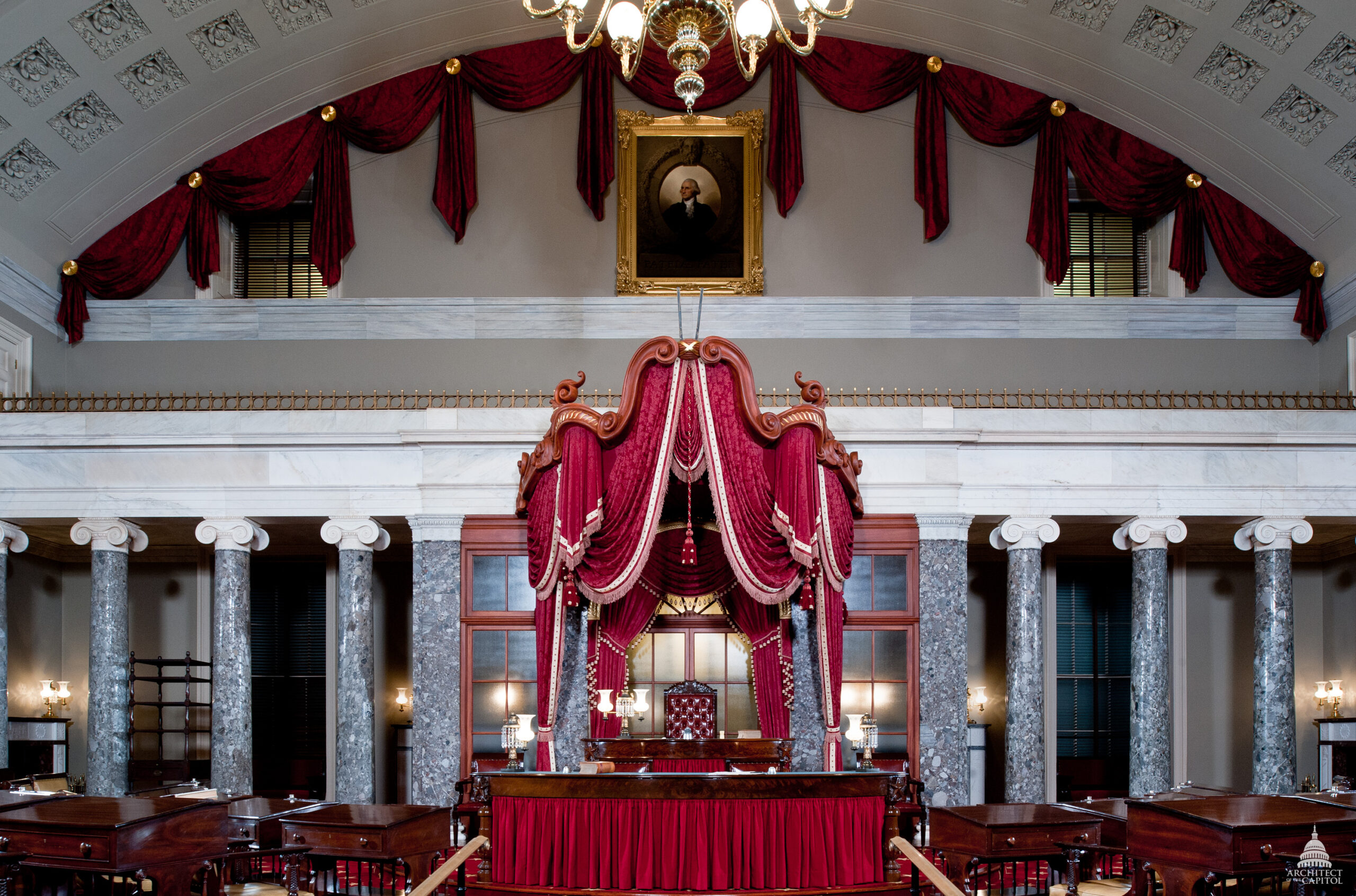
The United States Senate has voted 86–11 to pass the Lindsey O. Graham Sanctioning Russia and Iran Act of 2026, a package targeting Russian officials, oligarchs, financial institutions and the shipping network known as the shadow fleet. It also authorises tariffs of up to 500% on Russian goods and up to 100% on goods from the largest buyers of Russian oil and gas.
In a legislature where almost nothing passes with margins like that, the vote itself is part of the story.
Advertisement — ad space reserved
What the bill actually does
There are three distinct mechanisms inside it, and they work differently.
Direct sanctions. These name people and institutions — officials, wealthy individuals, their family members, banks — and cut them off from the US financial system. Assets within reach are frozen; American entities may not transact with them.
Measures against the shadow fleet. The bill allows the president to designate operators of vessels used to move sanctioned oil. We explained recently what a shadow fleet is: ageing tankers held through shell companies, registered under permissive flags, insured obscurely or not at all. Designating operators is an attempt to reach the people behind the paperwork rather than chasing individual ships.
Tariff authority. This is the part that reaches beyond Russia. It would let the president impose tariffs of up to 100% on goods from countries that are major purchasers of Russian oil and gas — in practice, China and India above all.
Why the third one is different in kind
Sanctioning a Russian bank is a measure against Russia. Tariffing Indian or Chinese goods is a measure against India and China, intended to change their behaviour towards Russia.
Supporters argue this is the only thing that works. Russia’s oil is being sold; the revenue funds the war; and it continues because buyers exist. Sanction the seller alone and the trade simply reroutes. Make buying expensive and the calculation changes.
Critics make two objections. The first is practical: tariffs are paid by importers and passed to consumers, so the cost lands substantially at home. The second is diplomatic: penalising large countries for their energy purchases tends to push them closer to the country you were trying to isolate, and India in particular has stated repeatedly that its energy sourcing is a matter of national interest rather than alignment.
Both objections have force. Neither is decisive on its own, which is why the tariff authority was reportedly the most contested element during months of negotiation.
Advertisement — ad space reserved
Authority, not action
An important distinction runs through the whole package: much of it grants powers rather than exercising them.
The bill would allow the president to impose tariffs and designate vessel operators. Whether any of that happens, against whom, and at what level, would be decided afterwards by the executive branch.
This matters for reading the coverage. Headlines describing sanctions being imposed are describing a possibility being created. The legislature is handing over a lever; it is not pulling it.
It also matters for anyone trying to judge the effect. A sanctions regime that exists on paper but is applied sparingly behaves very differently from one applied in full — and the choice between those is not made by the people who voted here.
The Iran addition
The bill began as a Russia measure and was later extended to Iran, reportedly at the administration’s request, amid the continuing confrontation between the two countries. It extends existing Iran sanctions law and strengthens measures against entities investing in Iran’s energy sector.
Combining two adversaries in one bill is a common legislative move. It broadens the coalition of supporters, since legislators focused on either issue have reason to vote yes. It also means the two policies rise or fall together, which is efficient and not always wise.
Why the margin is notable
Eighty-six to eleven is an unusual result in a chamber that divides sharply on most questions. It indicates that support for economic pressure on Russia remains broad across both parties, whatever disagreements exist about military assistance to Ukraine.
The bill carries the name of Senator Lindsey Graham, who had pursued tougher measures against Moscow for years and who died in July. Naming legislation after a recently deceased legislator is partly tribute and partly practical: it raises the political cost of voting against it.
What happens next
It is not law. The bill must now pass the House of Representatives, where it can be amended, delayed or left unscheduled, and then be signed by the president.
A large Senate margin creates pressure but guarantees nothing. Bills passing one chamber overwhelmingly and then stalling in the other is an ordinary feature of the system, not an anomaly.
The signals worth watching are whether House leadership schedules a vote, whether the tariff authority survives intact, and — should it become law — whether the powers are actually used.
Sources: Reuters; Euronews; RFE/RL; US Senate records, 7 August 2026.
Advertisement — ad space reserved
Leave a Reply