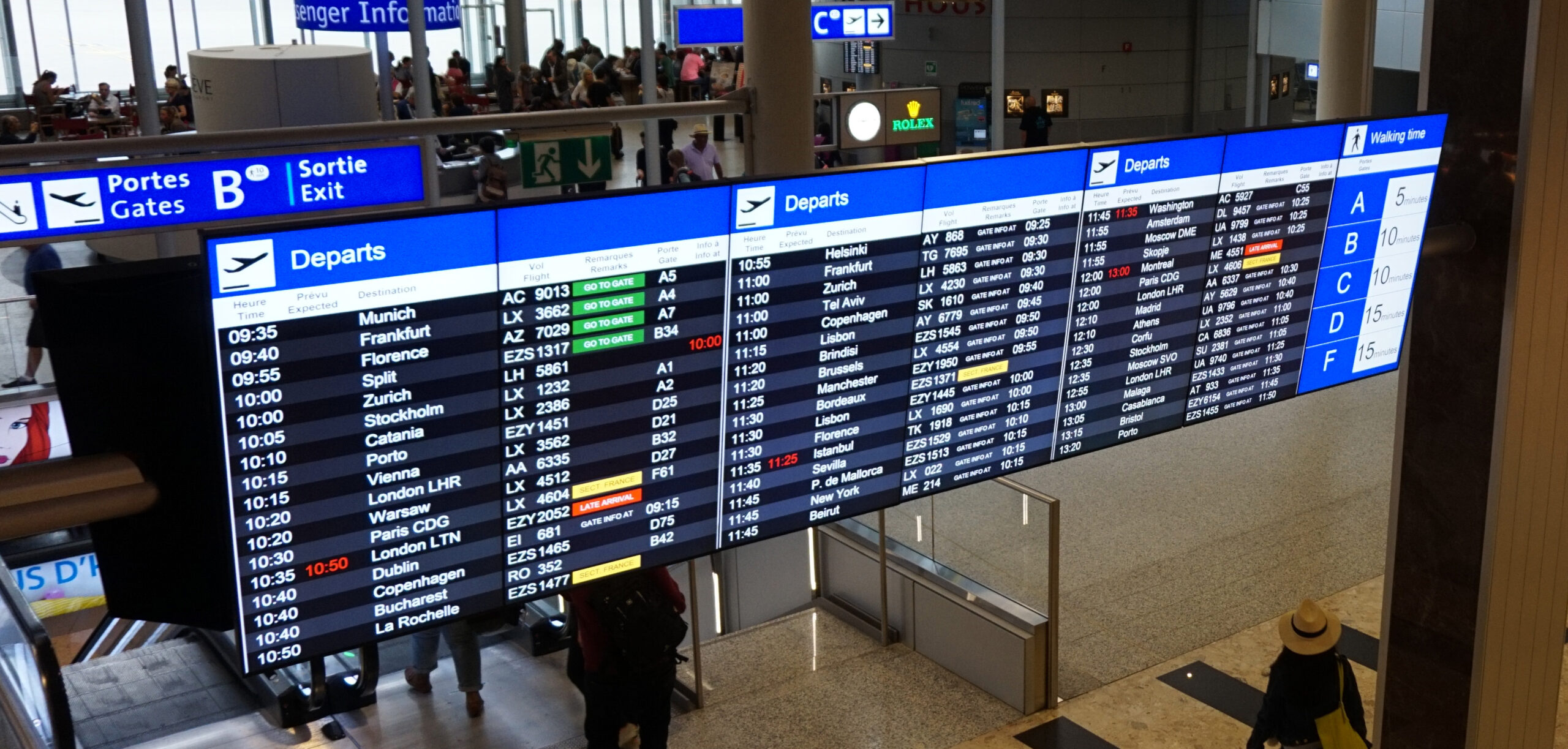
US embassies across the Middle East have advised Americans to leave the region, warning of possible escalation in the war. Separately, President Donald Trump said he had called off a planned strike on Iran, citing progress in ceasefire negotiations.
Two signals pointing in opposite directions, issued within days of each other. Both are worth reading carefully.
Advertisement — ad space reserved
What a departure advisory actually is
When an embassy tells its citizens to leave, it is not predicting an attack. It is saying that if conditions deteriorate, the government may not be able to help them get out.
That distinction matters. Evacuating civilians requires functioning airports, open airspace and safe roads — precisely the things that stop working first in an escalation. Advisories are issued while those still exist, which means they necessarily come before the danger, not during it.
They are also, unavoidably, a diplomatic signal. Governments know that telling citizens to leave is read abroad as a warning of intent, and they issue them anyway when they judge the risk real.
A cancelled strike
Announcing that an attack was planned and then called off is itself a form of communication. It tells the other side that the capability and the intention existed, and that restraint was a choice — while giving negotiators something to point to.
Whether this reflects genuine movement in talks or a pause in a continuing campaign cannot be determined from the announcement alone. Both have happened before in this conflict.
Advertisement — ad space reserved
Who cannot leave
A departure advisory applies to people who hold another passport and can afford a flight. Most people in the region hold neither.
That asymmetry deserves stating plainly, because coverage of evacuations can leave an impression that populations are being moved to safety. They are not. Foreign nationals leave; residents stay. Everything that follows falls on the people who were always going to be there.
How evacuations actually work
There is a sequence to these things, and knowing it makes the news easier to read.
First comes a travel advisory telling citizens not to come. Then a recommendation that those already there leave using commercial flights, while those still operate. Then, if conditions worsen, an ordered departure of non-essential embassy staff and their families — a step that carries particular weight, because governments are reluctant to reduce their own diplomatic presence. Last, and rarest, comes government-assisted evacuation, usually by chartered aircraft or naval vessel.
Each stage is more expensive and more difficult than the one before, and each depends on infrastructure that may already be failing. Commercial aviation is the pivot: once airlines suspend routes — which they do on their insurers’ advice, not on governments’ — the ordinary way out closes, and everything after that requires a state operation.
This is why advisories can seem alarmist relative to conditions on the ground. They are timed to the closing of exits, not to the arrival of danger.
Reading a cancelled strike
Publicly announcing that an operation was prepared and then halted is an established practice, and it serves several purposes at once. It communicates capability without expending it. It offers the other side a demonstration of restraint that can be reciprocated. It gives negotiators something concrete to reference. And domestically, it allows a leader to appear both willing to act and unwilling to act rashly.
The difficulty for readers is that the same announcement is consistent with very different underlying situations. It may mean talks are genuinely progressing. It may mean an operation was postponed for reasons unrelated to diplomacy — weather, intelligence, positioning — and framed afterwards as restraint. It may be pressure dressed as generosity.
Nothing in the public record distinguishes between those. Treating the announcement as evidence of a thaw would be going beyond what is known.
Advertisement — ad space reserved
The economic shadow
Departure advisories have effects well beyond the people they address. Insurance for staff, cargo and aircraft is repriced. Companies suspend operations and pull expatriate employees. Conferences and contracts are postponed. Local businesses that depend on foreign custom lose it immediately.
For countries in the region that are not party to the fighting, that is a real cost imposed by someone else’s escalation. A Gulf state can find its tourism and aviation revenue falling because of decisions taken in capitals far away.
What to watch
Whether commercial airlines continue flying into the region, whether the advisories are upgraded to ordered departures for embassy staff, and whether attacks on shipping in the Strait of Hormuz continue. Airlines and insurers tend to move before governments announce anything.
Sources: AFP via Arab News; Axios; The Japan Times.
Advertisement — ad space reserved
Leave a Reply