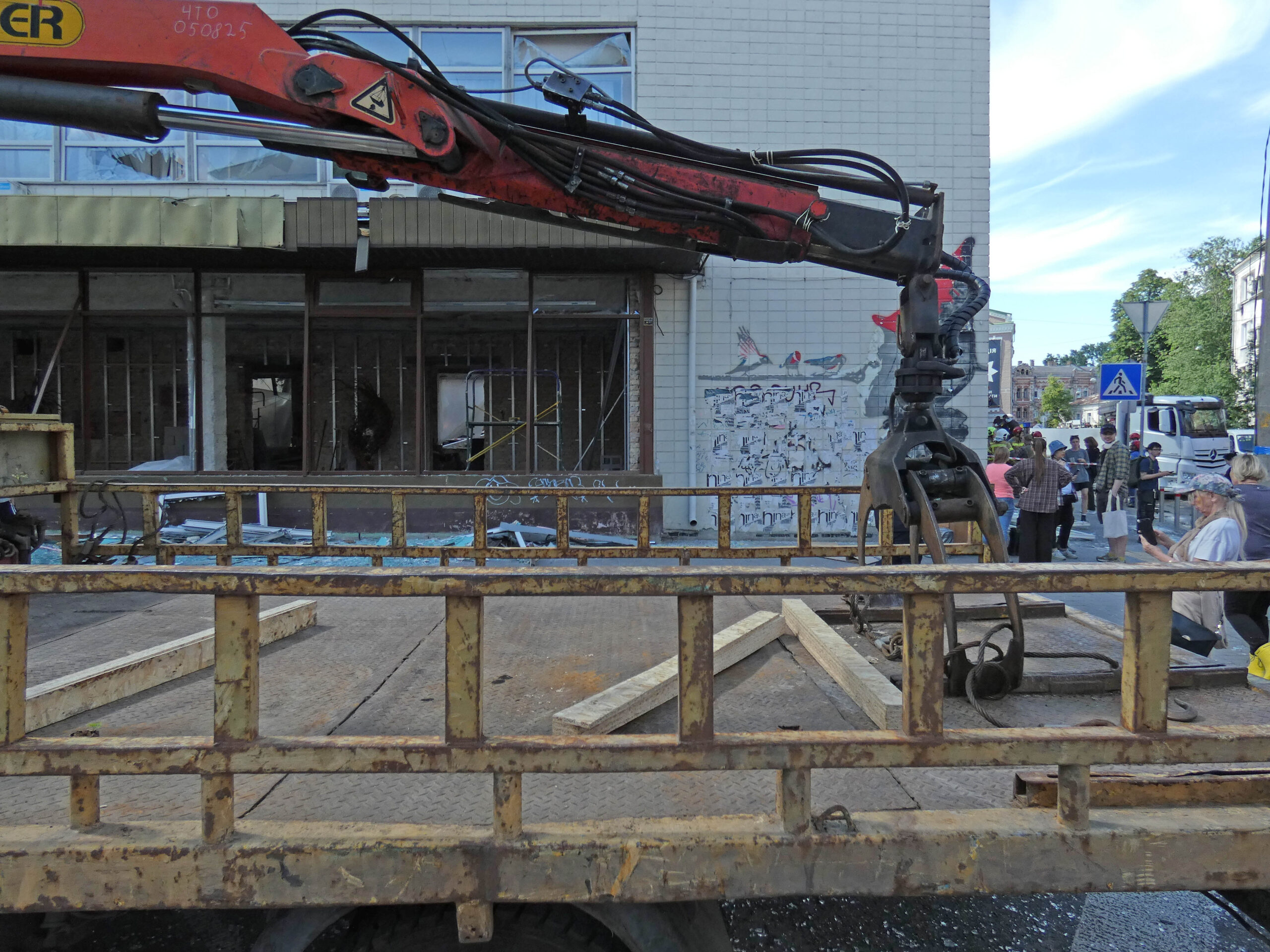
Ukrainian president Volodymyr Zelenskyy reported that a three-year-old boy and his grandparents were killed by a Russian drone strike. Three members of one family, in one place, at one moment.
Deaths like these are recorded in daily tallies alongside dozens of other figures. This article is about what those tallies contain.
Advertisement — ad space reserved
Why a grandparent and a grandchild
The composition of that household is not incidental. In a country at war, a great many homes hold exactly this combination: the very young and the elderly, with the generation in between at the front, working, or displaced elsewhere.
That pattern shapes who dies in strikes on residential areas. Casualty lists in this war are unusually weighted towards people who could not realistically have left, or who chose to stay because leaving meant abandoning someone who could not travel.
Why long-range drones changed civilian risk
Long-range attack drones are cheap compared with missiles, which means they can be launched in far greater numbers. They are slow, so they can be shot down — but a defence that stops most of a large salvo still lets some through.
The practical effect is a war in which places far from the front line are under repeated, unpredictable threat. Air defence is concentrated where it protects the most people and the most critical infrastructure, which necessarily leaves smaller towns and villages thinner covered.
We have looked at the technical side of this in how do you actually stop a drone?
Advertisement — ad space reserved
What the law says
International humanitarian law does not forbid civilian deaths in war outright. It requires that attacks distinguish between military targets and civilians, and that expected civilian harm not be excessive relative to the military advantage anticipated.
Establishing whether a specific strike breached those rules requires evidence about what was targeted and what the attacker knew — the kind of evidence that takes investigators months or years to assemble, and which is often contested by both sides.
What can be said now is narrower and still worth saying: three civilians, including a small child, were killed in their home.
Against the numbing
A war that continues for years produces a specific problem for anyone trying to follow it. Individual deaths stop registering. The mind, sensibly enough, protects itself.
But the daily figure is not an abstraction that happens to be expressed in people. It is the reverse. Each number is a household that will not be the same again — grandparents who were looking after a grandchild, and a three-year-old who had barely begun.
Reporting that keeps that visible is not sentimentality. It is accuracy.
Source: statement by President Volodymyr Zelenskyy, reported 8 August 2026; Wikipedia Portal: Current Events.
Advertisement — ad space reserved
Leave a Reply