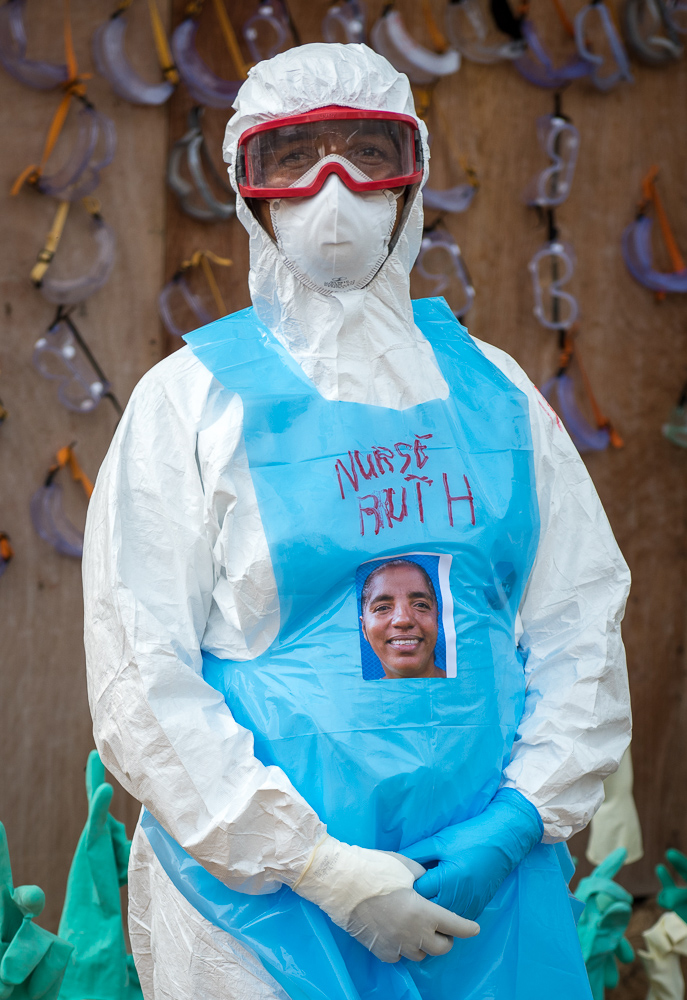
The Bundibugyo Ebola outbreak in the Democratic Republic of the Congo has reached 3,874 confirmed cases and 1,751 deaths, according to figures reported as of 4 August. It is the second-largest Ebola epidemic on record, and it is spreading faster than previous outbreaks in the country.
The United States has announced a further $242 million for the response, bringing its direct assistance to $512 million.
Advertisement — ad space reserved
What the numbers mean
Nearly 1,751 deaths against 3,874 confirmed cases indicates a very high fatality rate, which is characteristic of Ebola. But confirmed cases are not the same as total cases. In an outbreak of this size, some people fall ill and die without ever being tested, particularly in areas that are hard to reach or where people avoid treatment centres.
The phrase that matters most in the reporting is “spreading substantially faster than previous outbreaks”. Speed determines whether a response can catch up. An outbreak growing faster than contacts can be traced behaves very differently from one that is being contained.
Why Bundibugyo is a complication
Ebola is not a single virus. Bundibugyo is one of several species, named after the district in Uganda where it was first identified in 2007.
This matters practically. The vaccines and treatments developed during earlier epidemics were built against the Zaire species, which caused the largest previous outbreaks. Protection does not automatically carry across to a different species. That is a significant part of why a response that worked before may not work as well now.
Advertisement — ad space reserved
What the money buys
The new funding is intended to cover up to six months of response work: healthcare facilities, surveillance, contact tracing, infection prevention, logistics and medical supplies.
Contact tracing is the least visible item and among the most important. Ebola spreads through direct contact with the bodily fluids of someone who is already ill, which means transmission chains can in principle be broken — if every contact of every case is found and monitored. That is enormously labour-intensive, and it is the first thing to fail when cases outpace staff.
Logistics is the second underrated item. Protective equipment, safe burial teams, fuel and transport are what allow a clinic in a remote area to function at all.
How Ebola actually spreads
Understanding the transmission route explains almost everything about why this disease behaves as it does.
Ebola passes through direct contact with the blood or other bodily fluids of someone who is already showing symptoms, or with surfaces those fluids have contaminated. It does not travel through the air across a room, and someone incubating the virus without symptoms is not yet infectious.
That has a cruel consequence. The people most likely to be infected are those caring for the sick — family members, and health workers. An outbreak therefore concentrates among exactly the people a community can least afford to lose, and it spreads along lines of love and duty rather than at random.
Burial practices carry particular risk, because the body of someone who has died of Ebola remains highly infectious and traditional preparation involves washing and close contact. Safe burial teams exist to address this, and asking a grieving family to hand over a relative for a burial they cannot perform themselves is among the hardest parts of any response.
Why trust decides the outcome
The medical measures are well understood. What determines whether they work is whether communities accept them.
Consider how a response appears from the receiving end. People in unfamiliar protective suits arrive. Relatives who go into treatment centres are not always seen again. Traditional funerals are prohibited. In regions with long histories of conflict and neglect by distant authorities, suspicion is not irrational — it is a reasonable reading of previous experience.
Where that suspicion takes hold, people conceal illness, avoid treatment centres, and bury relatives privately. Every one of those responses is understandable and every one accelerates transmission.
Responses that have worked have generally done so by involving local leaders, survivors and community health workers from the start, and by making treatment centres places where families can see and speak with patients. That is slower and less visible than deploying equipment, and it is frequently the difference between containment and continued spread.
Advertisement — ad space reserved
Why this is harder than it sounds
Eastern DRC has faced armed conflict and mass displacement for years. Outbreak response depends on people being reachable, on health workers being safe, and on communities trusting the teams that arrive. Where any of those conditions fails, the medical tools matter less than the circumstances.
It is worth noting what did work recently: Uganda declared the end of its own Ebola outbreak on 28 July, after 42 days without a new confirmed locally transmitted case. That interval is the standard — twice the maximum incubation period — and it shows containment remains achievable.
The risk beyond DRC
Ebola does not spread through the air, and it is not transmitted by people who have no symptoms. That makes it far less likely than a respiratory virus to cross borders unnoticed, and it is the main reason previous outbreaks stayed largely regional.
The people at genuine risk are those living in affected areas and the health workers treating them. That is where an outbreak of this scale is measured — and where it must be stopped.
Sources: World Health Network public health alerts, 5 August 2026; NaTHNaC outbreak surveillance.
Advertisement — ad space reserved
Leave a Reply