On 3 September 2025, a spokesman for the al-Qaeda-linked group Jama’at Nusrat al-Islam wal-Muslimin announced a fuel blockade on southern Mali. One year and five days later, it is still running.
It is one of the most consequential events in West Africa and among the least covered. There is no front line, no battle to photograph, and no single day on which anything decisive happens. There are only tanker convoys that arrive or do not.
Advertisement — ad space reserved
The dependency being exploited
Mali is landlocked and imports roughly 95 per cent of its fuel by road, principally from Senegal and Côte d’Ivoire. Everything the country runs on arrives along a small number of highways.
JNIM’s method is to attack the tankers on those roads. Open-source tracking, including a Bellingcat investigation carried by ACLED, has documented the systematic destruction of convoys; more than 300 tankers are reported to have been destroyed since the blockade began. The group has long taxed vehicles moving goods through areas under its influence, so the shift from taxing traffic to destroying it was a change of method rather than of capability.
The aim, as analysts of the region read it, is not to capture Bamako. It is to make the capital ungovernable and to demonstrate that the junta cannot perform the basic function it seized power promising to perform.
What a year of this does to a city
Reporting from Bamako has described queues stretching outside filling stations late into the night, people travelling twenty kilometres by motorcycle taxi with an empty jerry can and returning with nothing, and rationing that prioritises military and government use. The capital has been noticeably darker at night as generation is reduced. Schools and universities closed for a period over the shortage.
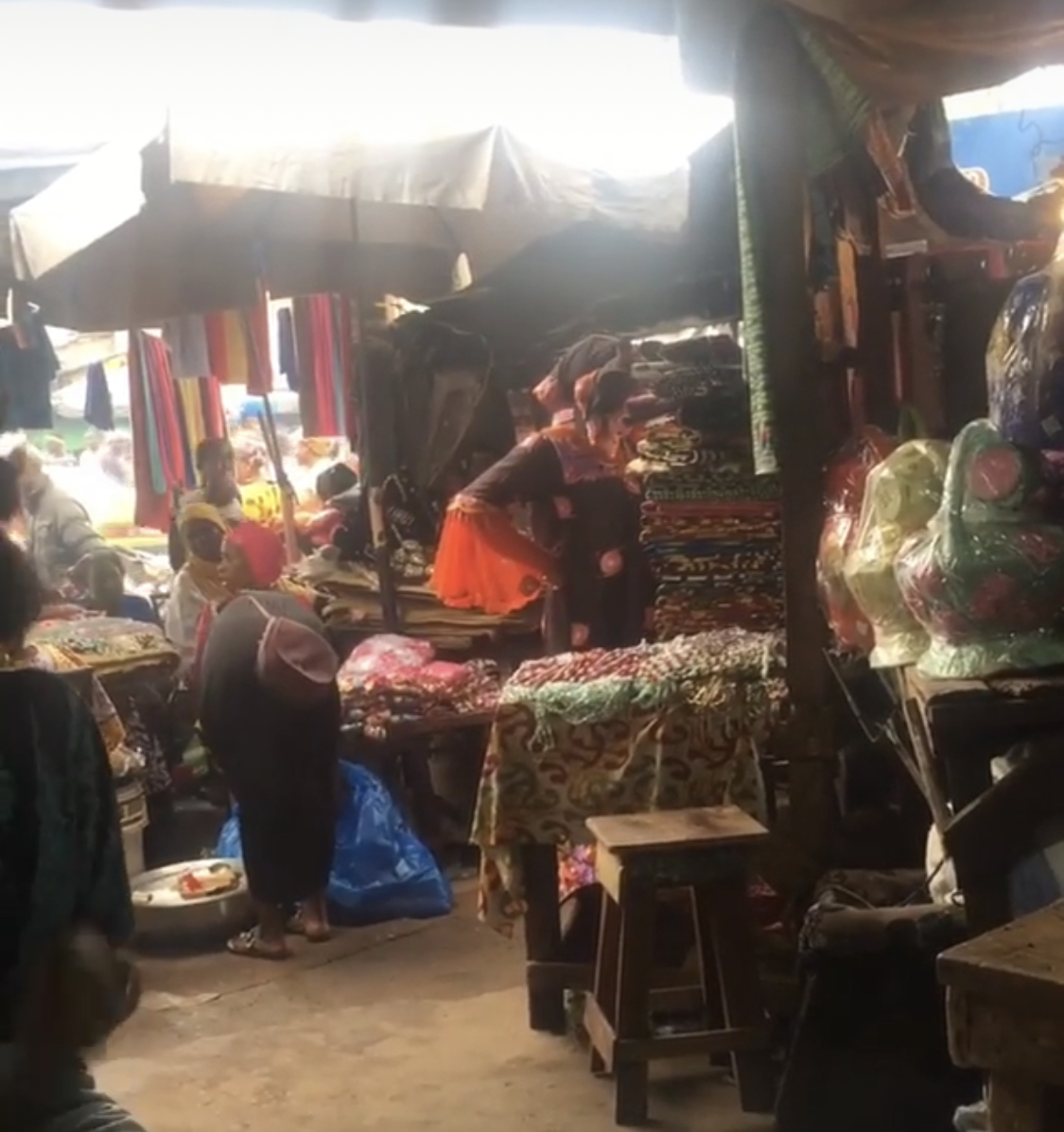
The wider economic effect runs through everything. In an economy where most goods move by road and much commerce is informal and cash-based, fuel scarcity is not one price rising. It is the cost of moving anything rising at once, which reaches food prices, market trading, medical transport and the ability of people to get to work.
This is what makes the story hard to report and easy to underestimate. The damage is diffuse. There is no casualty figure that captures it, and the people worst affected are those with the least margin — which is also the group least likely to be interviewed.
Advertisement — ad space reserved
What the government has tried
The junta, led by Assimi Goïta since coups in 2020 and 2021, has pushed fuel through in armed convoys, delivering over a thousand tankers from late October onward. In January 2026 it appointed a general to run what local media call the fuel war. It has relied on Russian Africa Corps personnel and Turkish drones after expelling French forces.
The blockade eased in early 2026, which was attributed variously to negotiations, to increased military activity, and to JNIM redeploying ahead of its April offensives. On 28 April the group announced a full blockade of Bamako again. Escorted convoys have not broken it; they have made it survivable.
Convoy escorting is itself costly. It concentrates fuel movement into predictable, announced events, which is precisely what an ambushing force wants, and it ties up military capacity that is not then available elsewhere. A convoy attack in early February was reported to have killed at least fifteen people.
The disagreement about where this ends
One reading, advanced by several Western analysts and reported in the financial press, is that the junta may eventually capitulate or the capital fall, and that Mali could become a jihadist-governed state on Europe’s southern approaches.
The counter-reading, made by researchers who study the Sahel closely, is that this prediction has been made repeatedly for a decade without arriving, that JNIM has shown no interest in the costs of holding a capital city, and that a group which profits from taxing and disrupting trade has reasons to prefer a weak state to no state. On this view the blockade is leverage in a negotiation, not a prelude to an assault.
What is not in dispute is the diplomatic signal. In late October 2025 the United States and United Kingdom told their nationals to leave Mali and drew down embassy staff, citing the fuel crisis and rising kidnappings. Those advisories have not been lifted.
Mali anchors the Alliance of Sahel States alongside Burkina Faso and Niger, both also under military rule and both facing the same insurgency. A method that works against one landlocked capital is available against the others. That is the reason to pay attention to a story with no battles in it — and a reminder, alongside our reporting on Nigeria’s failing electricity grid, of how much of West African life depends on supply chains that a small number of people can cut.
Advertisement — ad space reserved
Sources
- Bellingcat investigation into attacks on fuel convoys bound for Bamako, carried by ACLED
- Associated Press reporting from Bamako on fuel queues and shortages
- Al Jazeera reporting on the blockade and on Western embassy advisories
- Africa Defense Forum and Institute for Security Studies commentary on JNIM’s method
- Open-source security reporting on escorted convoys and the appointment of a general to lead the response
- Wikipedia, Mali fuel blockade, for chronology including the 28 April 2026 reimposition
Leave a Reply