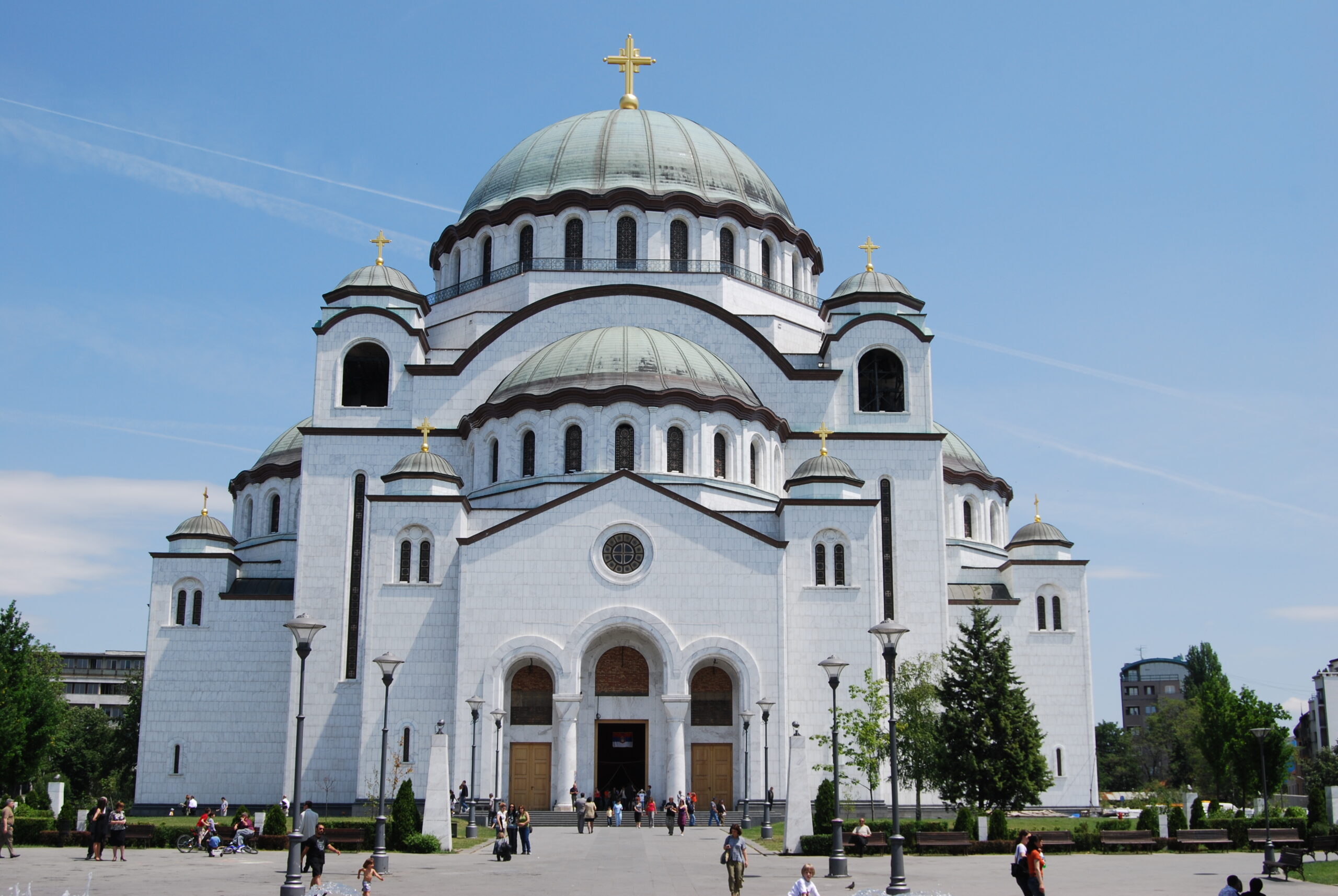
Patriarch Porfirije, head of the Serbian Orthodox Church, led the funeral service for Ratko Mladić at the Church of St Luke in Belgrade on Monday. Mladić was convicted of genocide, war crimes and crimes against humanity, and died in a United Nations detention unit while serving a life sentence.
Ceremonies of this kind raise a question that recurs across many faiths and is genuinely difficult: what a church owes a person its own tradition would describe as a grave sinner, and what it owes everyone else.
Advertisement — ad space reserved
The case for a funeral
The theological argument is not weak, and it should be stated properly before it is criticised.
In Orthodox Christianity, as in Catholic and most Protestant practice, funeral rites are prayers for the dead rather than verdicts on them. Judgment belongs to God. A church that refused burial to sinners would have to establish a threshold of wickedness at which its prayers stop, and most Christian traditions have concluded that establishing such a threshold is itself a form of presumption. Clergy across many denominations have buried people convicted of terrible crimes on precisely this reasoning, and have argued that doing so is not an endorsement but a refusal to claim God’s role.
There is also a pastoral argument. A family in grief is a family in grief. Ministering to them is not the same as honouring the person they are grieving.
The case against what happened on Monday
The objection is not that a priest prayed over a coffin. It is about everything surrounding that.
The head of the church led the service personally. Soldiers of the Serbian Armed Forces carried the coffin. Troops lined the route and police saluted. The coffin was draped in flags. Government ministers attended. Thousands of mourners filed past, some kissing the coffin, and many spoke of the deceased as a national hero.
The distinction critics draw is between a funeral and a state honour, and between prayer for a sinner and public veneration. A quiet burial with a parish priest, they argue, would satisfy every theological obligation described above. The choice to have the patriarch officiate at a ceremony of that scale is a public act with public meaning, and the church knew what meaning would be read into it.
Civil society groups in Serbia protested that the military honours insulted victims and survivors. In Sarajevo, a retired pharmacist whose nine-year-old son was killed by a grenade fired by Mladić’s forces during the siege told Reuters that he deserved to be erased from memory, not promoted as a hero.
Advertisement — ad space reserved
Why the church is in this position at all
The Serbian Orthodox Church occupies a place in Serbian national identity that has no close parallel in Western Europe. Through the Ottoman centuries it was the institution that carried Serbian language, literacy and identity when there was no Serbian state. That history is why it is treated as a national institution and not only a religious one, and it is why its involvement in a public ceremony reads as a national statement.
The same closeness has drawn sustained criticism. Scholars of the Yugoslav wars have documented how religious symbolism was used to frame that conflict in ethnic and confessional terms by parties on all sides, and have argued that clergy who did not resist that framing lent it authority. Defenders of the church respond that it was one institution among many in a collapsing state, that it also sheltered people and called for restraint at various points, and that collective blame on a church is the same error as collective blame on a people.
This paper reports on faith openly and does not spare churches, including those whose traditions we would otherwise treat sympathetically. The standard we try to apply is the one the churches state themselves: a religious institution asks to be judged by whether its public acts are consistent with what it teaches.
The question that remains
Nothing in Christian teaching required Monday’s ceremony to take the form it took. Prayer for the dead did not require an honour guard. Pastoral care for a family did not require a patriarch, a state escort and thousands in the street.
The gap between what the theology required and what was actually staged is where the criticism lands, and it is a gap the church has not publicly explained. It remains open to it to do so.
Our report on the diplomatic consequences, including Bosnia’s decision to downgrade relations with Serbia, is here.
Advertisement — ad space reserved
Sources
- Balkan Insight, Ratko Mladic buried with military honours in Serbia, thousands attend funeral, 7 September 2026
- Reuters reporting from Belgrade and Sarajevo, 7 September 2026
- Statement of the Delegation of the European Union to Bosnia and Herzegovina, 7 September 2026
- International Criminal Tribunal for the former Yugoslavia, judgment in the case of Ratko Mladić
- Published scholarship on religion and national identity in the former Yugoslavia
Leave a Reply