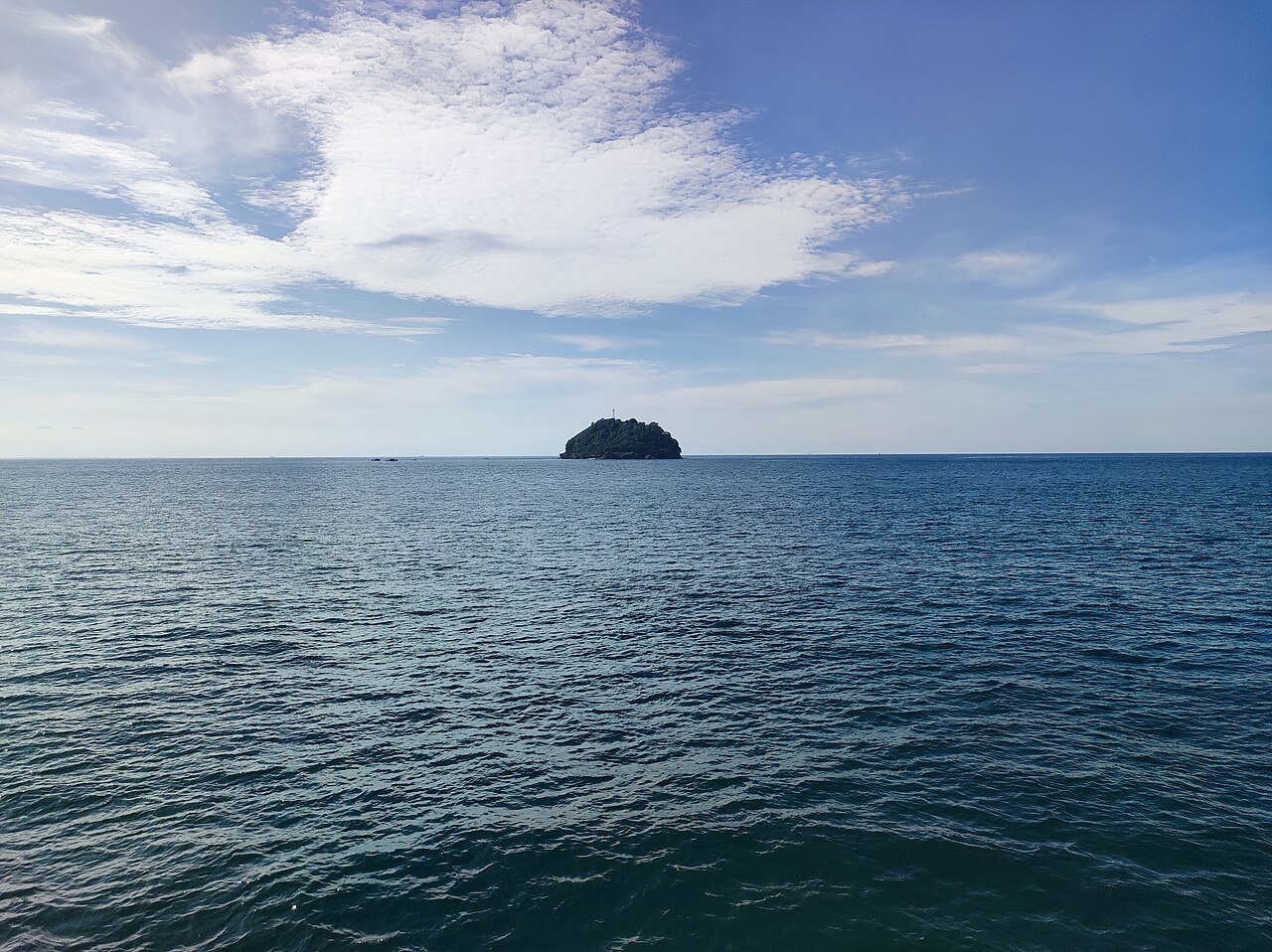
Soekarno-Hatta International Airport, Indonesia’s busiest, suspended flight operations after volcanic ash from Anak Krakatoa reached the airport. Soekarno-Hatta serves Jakarta and handles tens of millions of passengers a year; it is the principal air gateway to a country of more than 280 million people spread across thousands of islands.
Advertisement — ad space reserved
Why ash closes airports when smoke does not
Volcanic ash is not soot. It is pulverised rock and glass, and its danger to aircraft is specific and well documented.
Jet engines run hot enough to melt the silicate particles, which then fuse onto turbine blades and nozzle guide vanes, restricting airflow and, in the worst case, causing engines to flame out in flight. The most cited example is a British Airways 747 that lost all four engines over Indonesia in 1982 after flying through an ash cloud from Mount Galunggung, restarting them only after descending clear of it. Ash also sandblasts windscreens to opacity and blocks the pitot tubes that measure airspeed.
Because ash is invisible to standard weather radar, aviation authorities do not attempt to fly around it at short range. The response is to close airspace and ground aircraft until Volcanic Ash Advisory Centres confirm the plume has cleared. Suspending operations at a major hub is the standard answer, not an overreaction.
The volcano in question
Anak Krakatau — “child of Krakatoa” — rose from the caldera left by the 1883 eruption of Krakatoa, one of the deadliest volcanic events in recorded history. It sits in the Sunda Strait between Java and Sumatra, roughly 150 kilometres from Jakarta.
Its recent history is a warning about which hazard actually kills people. In December 2018, part of the volcano’s flank collapsed into the sea and generated a tsunami that struck coastal communities in Java and Sumatra without warning, killing more than 400 people. There was no earthquake to trigger the standard tsunami alert, and the wave arrived at night. Indonesia has since worked on detection for landslide-generated tsunamis, which remain far harder to warn for than seismic ones.
An ash plume reaching Jakarta is disruptive and expensive. It is not, by itself, the scenario that concerns Indonesian volcanologists most.
Advertisement — ad space reserved
What a closed hub does to an archipelago
In most countries, an airport closure is an inconvenience absorbed by rail and road. Indonesia is spread across more than 17,000 islands, and domestic aviation performs functions that surface transport cannot: medical transfers, perishable freight, and the movement of officials and supplies between islands. A suspension at the principal hub propagates through the domestic network within hours, because aircraft and crews scheduled to be elsewhere are not.
Ash also causes problems on the ground that outlast the plume. It abrades runway surfaces, contaminates fuel systems and, when wet, becomes heavy and slippery — several centimetres can collapse a hangar roof. Reopening usually requires physical cleaning rather than simply an all-clear from the advisory centre.
What to watch
Whether Indonesia’s volcanology agency raises the alert level for Anak Krakatau; whether the exclusion zone around the island is widened; whether ashfall is reported in the coastal districts of Banten and Lampung, where the health effects and the agricultural damage land; and how quickly the Darwin Volcanic Ash Advisory Centre, which covers this region, reports the plume dispersing.
Sources
- AFP via ABS-CBN News, on the suspension of operations at Soekarno-Hatta, 6 September 2026
- Background on volcanic ash hazards to aviation and on the 2018 Anak Krakatau flank collapse and tsunami
Leave a Reply