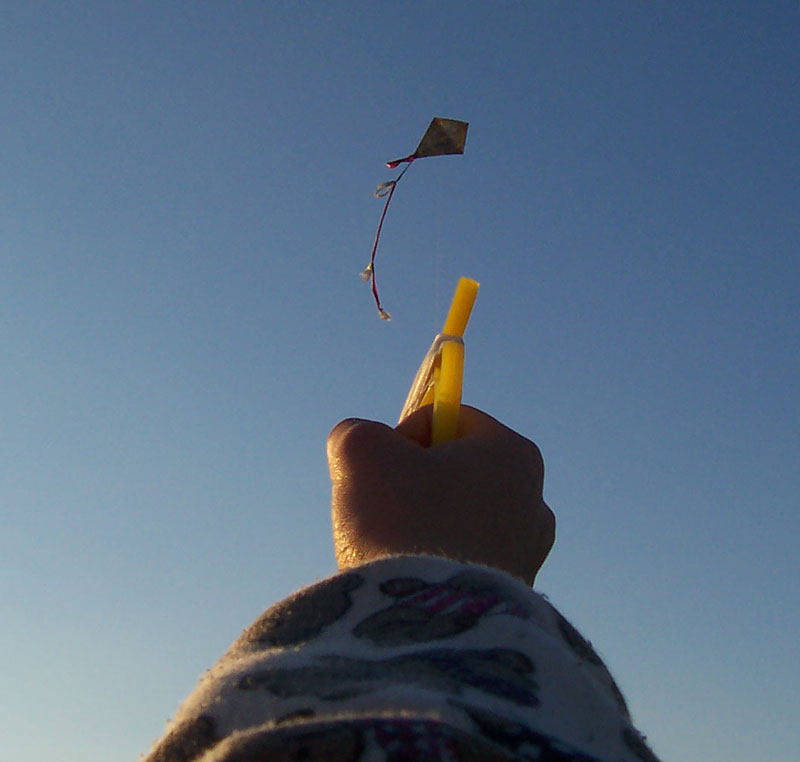
Israeli Defence Minister Israel Katz said on Thursday that any balloon or kite launched over Gaza would be treated as a hostile act, and renewed a threat to target anyone seen releasing one. Parents in Gaza have responded by enforcing a ban of their own, telling children not to fly kites.
On Friday, an Israeli drone strike killed three members of the same family north of Khan Younis, according to local reports. Strikes the previous day killed three Palestinians and wounded others.
Advertisement — ad space reserved
Where the policy comes from
The concern is not invented. Incendiary kites and balloons — a burning rag or a small device attached to a line or a bundle of party balloons — were used from Gaza in significant numbers from 2018 onwards, and they burned thousands of acres of farmland and nature reserve in southern Israel. Israeli communities near the boundary lost crops and woodland to fires started this way. It is a real tactic with a documented history, and the Israeli position is that anything airborne launched towards the boundary has to be treated as a potential incendiary device because it cannot be identified in flight.
The difficulty is what follows from that premise. A rule that treats every launch as hostile necessarily treats a child’s toy as hostile, because the two are indistinguishable from a drone camera at altitude. The defence minister’s formulation — that any launch is a terrorist act — states that consequence openly rather than hiding it.
The legal question
Under the law of armed conflict, a person becomes a lawful target by taking a direct part in hostilities, and force used must be necessary and proportionate to the military advantage sought. Legal scholars generally accept that launching an incendiary device across a boundary can meet that threshold.
What the same scholars dispute is a category rule announced in advance that dispenses with case-by-case assessment. The objection is not that incendiary kites are protected activity. It is that a standing declaration converting a class of objects into a class of targets removes the step where someone determines whether this particular launch, by this particular person, is a threat — and in a territory where children fly kites for the ordinary reason that children fly kites, that step is where the protection of civilians lives.
Advertisement — ad space reserved
What it costs on the ground
The practical effect has been enforcement by parents. A community worker in Gaza, speaking to reporters this week, made the point that children there have already lost their schooling, and asked whether the simplest and cheapest toy available to them should be taken as well.
Child psychologists working in conflict zones have written extensively about why this matters more than it sounds. Play is not a luxury that resumes when a war ends; it is one of the few mechanisms through which children process what is happening to them, and its absence is associated with worse long-term outcomes. A ban that families impose on themselves out of fear reaches further than one imposed from outside, because it operates every day without needing to be enforced.
Israel’s position, consistently stated, is that responsibility for conditions in Gaza rests with Hamas, which it says embeds its operations among civilians and has used civilian cover for attacks including incendiary launches. That argument is part of the record and we report it as such.
The measurable part
Amid a policy dispute that will not be resolved, one thing can be counted: whether anyone is killed or injured while flying a kite. If the declaration is enforced as stated, that number will not stay at zero, and it will be checkable. We will report it if it happens.
Advertisement — ad space reserved
Sources
Statements by Israeli Defence Minister Israel Katz; Democracy Now!; contemporaneous reporting on incendiary balloon and kite launches from Gaza since 2018; International Committee of the Red Cross guidance on direct participation in hostilities.
Leave a Reply