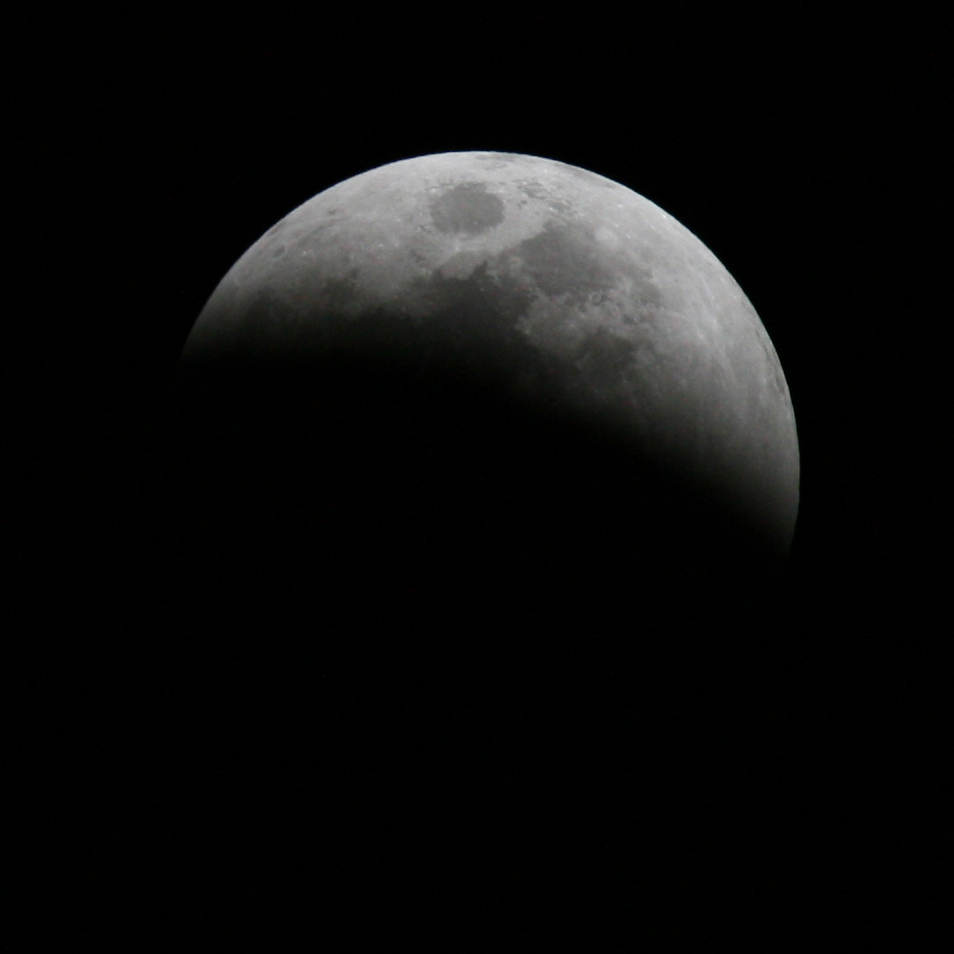
Overnight on 27-28 August, the Earth’s shadow will move across the face of the full moon in the deepest partial lunar eclipse for some years. At maximum, 96.2 per cent of the lunar surface will be inside the dark central part of Earth’s shadow — close enough to total that most observers will see something that looks like a total eclipse with one bright edge left over.
Who can see it
Everyone on the night side of Earth during the eclipse gets some view. According to TimeandDate.com, up to 987 million people are positioned to see the entirety of the partial stage, with the Americas best placed. Around 3.34 billion people will be able to see some part of the partial phase, across the Americas, Europe and Africa.
For readers in northern Europe, the eclipse falls in the early hours and the moon will be low, so a clear horizon to the south and west matters more than usual. Several observatories and astronomy organisations run livestreams, which is the reliable option if the sky is cloudy or the eclipse is not visible where you are.
Why “partial” is misleading here
The word suggests a lesser event, and for most partial eclipses that is fair — a bite taken out of one side of the moon, easy to miss if you are not looking.
A 96 per cent partial is a different experience. Almost the whole disc goes dark and takes on colour, while a thin sliver at the edge stays in full sunlight. That sliver is very much brighter than the shadowed part, which creates a striking contrast, and it also makes the eclipse harder to photograph well than a total one: no single exposure captures both the bright rim and the dim shadowed surface.
From Plain Sight News
How to watch
- No equipment needed. Unlike a solar eclipse, a lunar eclipse is entirely safe to look at with the naked eye. There is nothing to filter — you are looking at reflected light, and less of it than usual.
- Binoculars help more than a telescope. They show the colour and the shadow’s curved edge without the narrow field of view that makes a telescope awkward for something the size of the moon.
- Give your eyes time. The shadowed part is dim. Twenty minutes away from bright screens and lights makes a substantial difference to what you can see.
- Watch the edge, not the whole. The curve of Earth’s shadow on the lunar surface is the detail worth looking for — it is the same observation that let ancient astronomers argue the Earth was a sphere.
The colour question
The shadowed portion will not be black. It will be some shade of copper, orange or deep red, and how red depends on the state of Earth’s atmosphere on the night — including how much volcanic dust and smoke is in it. We explain the mechanism in this separate piece on why the eclipsed moon turns red.
Why eclipses do not happen every month
There is a full moon roughly every 29.5 days, and an eclipse requires the Sun, Earth and Moon to line up — so why not monthly?
Because the Moon’s orbit is tilted by about five degrees relative to Earth’s orbit around the Sun. Most full moons pass above or below Earth’s shadow rather than through it. Eclipses happen only when a full moon coincides with the Moon crossing the plane of Earth’s orbit, which is why they cluster in seasons roughly six months apart rather than occurring every fourth week.
From Plain Sight News
Leave a Reply