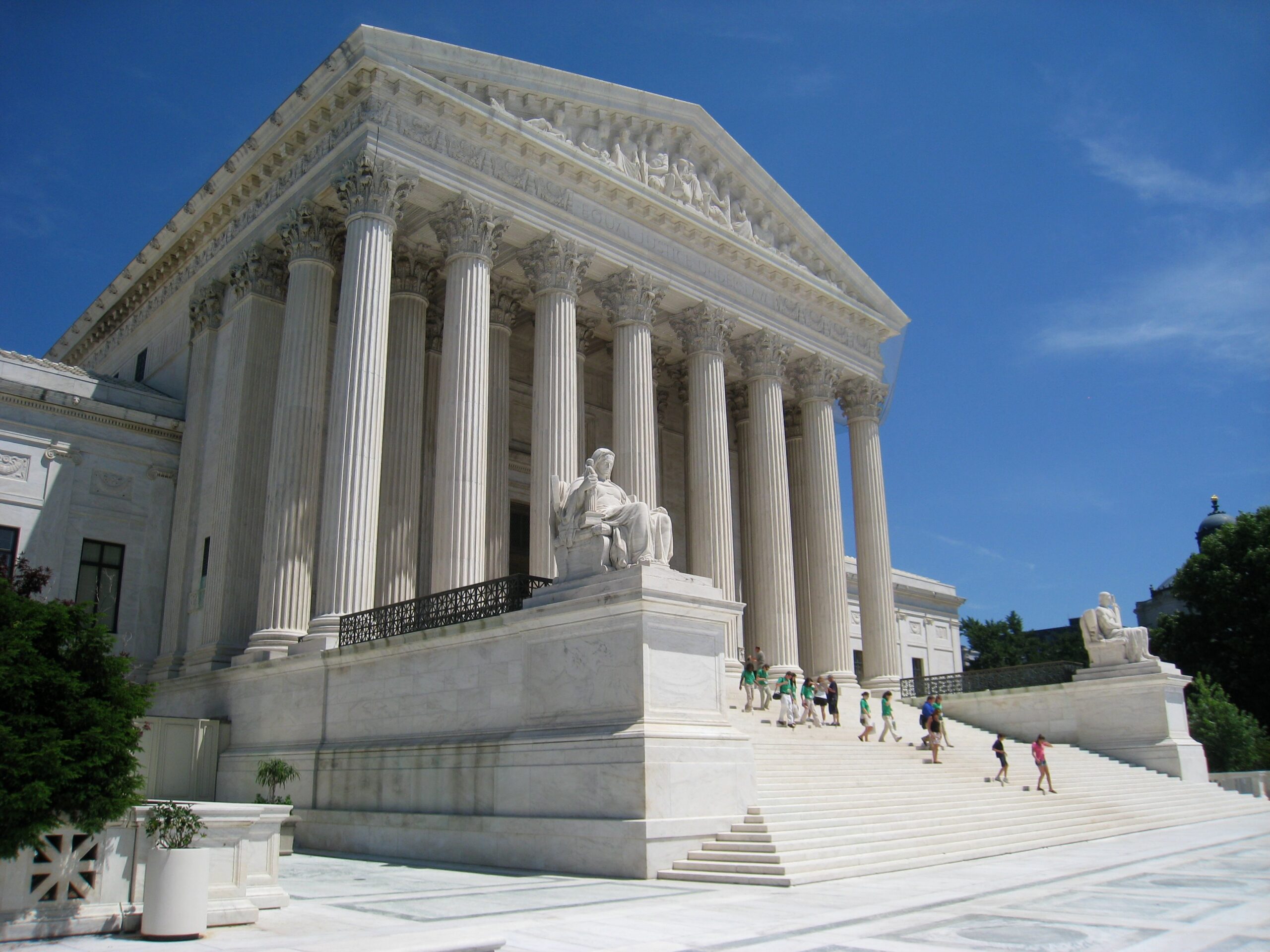
The United States Supreme Court on Monday lifted an injunction that had blocked President Donald Trump’s executive order restricting mail voting, removing one of two legal obstacles standing between the order and the November midterm elections.
The order was unsigned, issued on the court’s emergency docket in Trump v. California, and divided the justices 6-3 along familiar ideological lines. It does not decide whether the executive order is lawful. It decides that the challenge to it arrived too soon.
What was blocked, and by whom
The executive order, signed on 31 March 2026, directs the creation of a federal list of eligible voters and instructs the US Postal Service to deliver ballots only to people on that list. It also envisages unique identifiers on ballot envelopes so that they can be tracked, and draws on data held by other federal agencies to verify eligibility.
In June, Judge Indira Talwani of the federal district court in Massachusetts issued an injunction preventing the federal government from enforcing key provisions against the 23 states and the District of Columbia whose attorneys general and governors had sued. The list included California, Michigan, Arizona, Nevada, New York, North Carolina, Pennsylvania and Wisconsin.
The administration appealed, arguing that the injunction had been issued before the Postal Service and other agencies had finalised how they would carry the order out, and that it also prevented implementation in states that had not sued. A parallel application was filed by Alabama and eleven other states, and the court granted that one too.
From Plain Sight News
The reasoning
The majority’s position was procedural. Federal courts, the court wrote, review final rules rather than proposed ones, and certainly not the internal directives that precede a proposed rule. If the Postal Service’s final rule harms the states, the states may challenge that rule.
This is a real principle of American administrative law, and it exists for a sensible reason: agencies change their minds during rulemaking, and courts prefer not to rule on a policy that may never take the form being litigated. It also has a practical consequence in a case running against an election calendar. Every month spent waiting for a rule to become final is a month closer to the vote.
As it happens, the Postal Service announced its final regulation late last week, and the states had already begun a fresh effort to block it.
The dissent
Justice Sonia Sotomayor, joined by Justice Elena Kagan, wrote that the decision does not address whether the president’s attempts to interfere with the states’ administration of the November elections are lawful, and does not suggest that the executive branch has the constitutional or statutory authority to implement the directives. In her framing, the ruling postpones the question rather than answering it. All three of the court’s liberal justices dissented publicly.
Why the constitutional question is difficult
The underlying dispute concerns the division of authority over elections. Under the US Constitution, the times, places and manner of congressional elections are prescribed by state legislatures, with Congress retaining the power to alter those regulations. The president is not named in that clause.
The states argue that this leaves no room for an executive order setting national ballot standards without legislation. The administration argues that the order operates on federal agencies — chiefly the Postal Service, which it controls — rather than on the states directly. That distinction between regulating a federal agency and regulating an election is the heart of the case, and it remains undecided.
From Plain Sight News
What it means for November
Less than the headlines suggest, at least for now. A second injunction remains in place, and the fresh challenge to the finalised postal rule has already started. Election administration is also a practical business: ballots are printed, voter files are prepared and postal procedures are trained months in advance, and officials in several states have said publicly that changing the rules this close to an election is difficult regardless of who wins in court.
The wider context is a set of proposed changes to US voting rules, including a congressional package known as the SAVE America Act. The president has argued that mail voting is vulnerable to fraud; election officials, courts and audits in both parties have consistently found no evidence of fraud on a scale capable of changing national results, and news organisations including Reuters describe his claims of widespread fraud in the 2020 election as false.
Roughly a third of American voters have cast their ballots by mail in recent federal elections, with the share considerably higher in some western states where mail voting is the default. That is the population whose voting method is now in dispute.
From Plain Sight News
Sources
- Votebeat, “Supreme Court lifts 1 of 2 injunctions on Trump’s mail-voting executive order”, 24 August 2026
- The Hill, on the majority’s reasoning and the dissent, 24 August 2026
- NBC News, “Supreme Court hands preliminary win to Trump on mail-in ballots executive order”, 24 August 2026
- Reuters via US News, “US Supreme Court Lifts a Judicial Hurdle to Trump’s Mail-In Ballot Curbs”, 24 August 2026
Leave a Reply