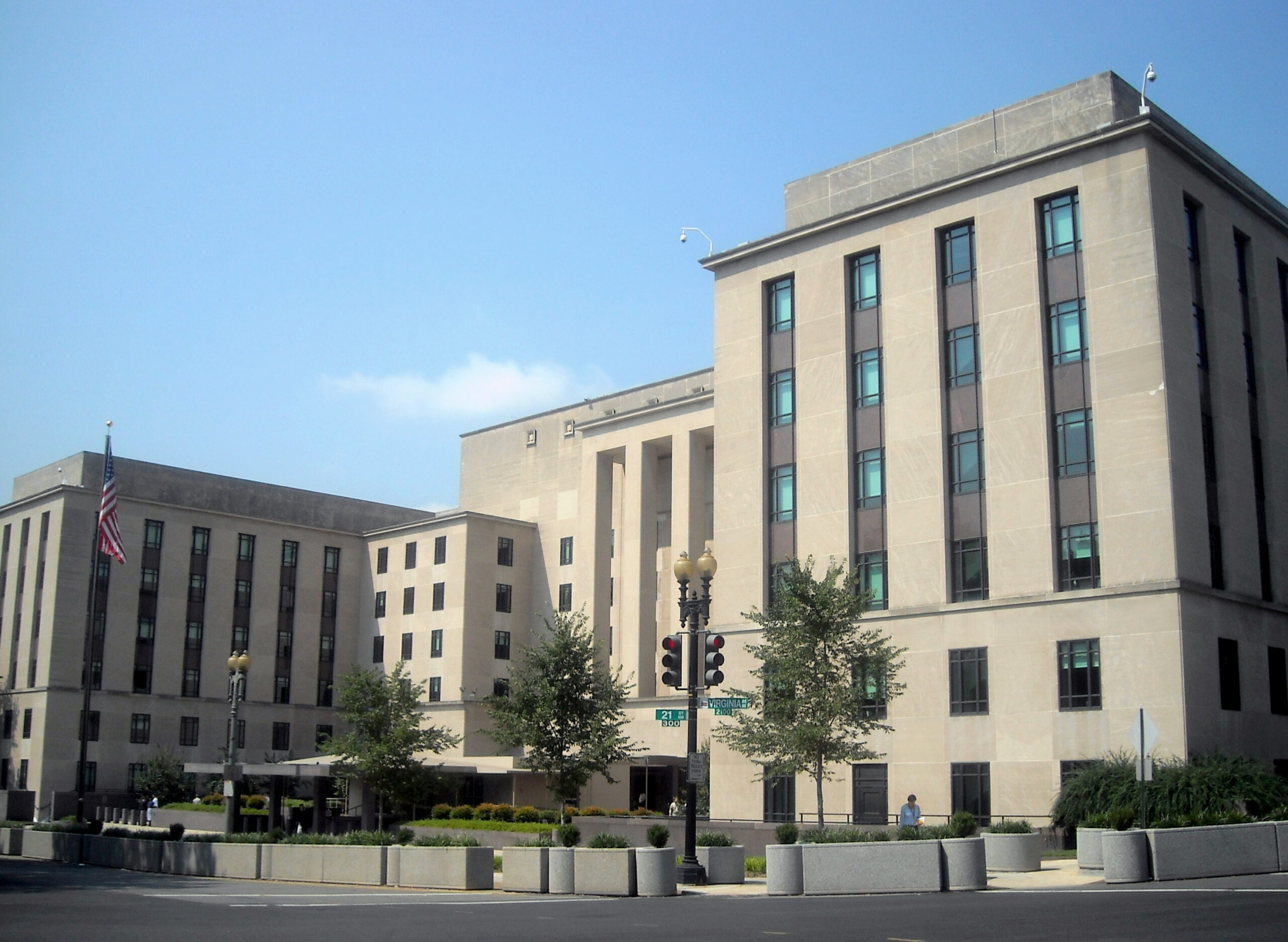
When the United States took Syria off its State Sponsor of Terrorism list on Monday, the phrase appeared in headlines around the world with very little explanation attached. It is a term that sounds self-explanatory and is not. Here is how the list works.
One official’s decision, not a court’s
The list is maintained by the US Secretary of State. A country goes on it when the Secretary determines that its government has repeatedly provided support for acts of international terrorism. There is no trial, no independent tribunal and no burden of proof in the legal sense. It is an executive judgement, made under authorities that Congress created in the late 1970s and has amended since — principally the Export Administration Act, the Arms Export Control Act and the Foreign Assistance Act.
That matters for understanding both what a listing means and what a delisting means. Neither is a finding of fact in the way a verdict is. Both are policy decisions, and both can be reversed by a later administration.
Who is on it
The list has always been short. Syria had been on it since 1979, longer than any other country. With Syria removed, the remaining designated states are Iran, North Korea and Cuba. Countries have come off before: Iraq was removed in 2004, Libya in 2006, North Korea was removed in 2008 and added again in 2017, Sudan was removed in 2020, and Cuba has been removed and re-listed more than once.
From Plain Sight News
What the label switches on
Four sets of restrictions follow automatically from a designation.
- Foreign assistance. Most forms of US aid are prohibited, and the United States is required to vote against loans to the country at institutions such as the World Bank and the International Monetary Fund.
- Defence exports. Sales and transfers of weapons and defence services are banned.
- Dual-use exports. Goods and technologies with both civilian and military applications face tight licensing controls, which in practice can cover items as ordinary as certain industrial machinery, medical equipment or aircraft parts.
- Financial and legal consequences. Various financial restrictions apply, and the designation strips away part of the sovereign immunity that normally protects states in US courts, allowing victims of terrorism to sue the designated government.
Why a US label reaches far beyond America
This is the part that is easy to miss. The formal restrictions bind American entities. The economic damage is done by everybody else.
A bank in Europe or Asia making a decision about a designated country has to weigh a modest amount of business against a compliance problem, the possibility of falling foul of related US sanctions, and the reputational cost if something goes wrong. The rational answer, almost always, is to decline the business entirely. Compliance officers call this de-risking. Insurers take the same view, and without insurance, ships do not sail and cargo does not move.
The result is that a designation functions as a general warning sign long after the specific legal prohibitions are understood. It is also why removal does not automatically restore normal trade. The sign comes down; the habit of avoidance takes longer to unlearn.
From Plain Sight News
How a country gets off the list
There are two routes, and both run through the President.
The first requires the President to certify that the government in question has fundamentally changed — that its leadership and policies are different from those that earned the designation, that it is not supporting terrorism now, and that it has given assurances about the future. The second requires certification that the country has not supported international terrorism for the previous six months and has given assurances that it will not do so again.
Either way, the President must notify Congress 45 days in advance. Congress can block the move by passing legislation, which is rare and would require enough votes to survive a veto. If Congress does not act, the rescission takes effect. That is the sequence Syria’s case followed: notification in July, and the formal step once the clock ran out in August.
Two things the list is not
It is not a list of terrorist organisations. Groups are handled through separate designations — Foreign Terrorist Organizations and Specially Designated Global Terrorists — which is why removing Syria from the state list and removing Hay’at Tahrir al-Sham from the group list were two distinct announcements on the same day.
And it is not a comprehensive sanctions programme. Countries can be under heavy US sanctions without being on this list at all, and a delisted country can remain subject to sanctions aimed at particular individuals, sectors or conduct. The list is one lever among many. Its unusual weight comes less from what it prohibits than from what it signals.
From Plain Sight News
Leave a Reply